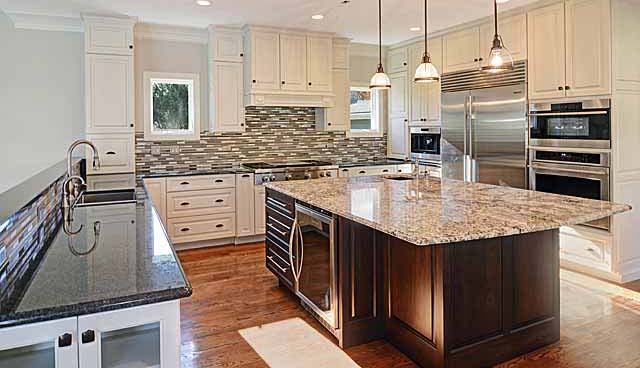
Modern homeowners are looking for more than extra square footage. They want flexible, beautiful, functional living areas that feel like a natural extension of the rest of the home. The best basement finishing ideas combine smart space planning, durable materials, comfortable lighting, and design features that support how families actually live. Whether a basement becomes a media room, guest suite, home office, fitness area, wine cellar, playroom, or full lower-level retreat, the goal is to create usable space that feels intentional, polished, and connected to the home’s overall style.
A finished basement can be one of the most valuable upgrades in a modern home because it turns underused square footage into purposeful living space. Instead of treating the basement as storage or utility space only, homeowners can design it around entertainment, relaxation, work, wellness, and hospitality. With the right planning, a basement can feel warm, open, and refined rather than dark or disconnected.
For luxury and custom homes, basement finishing is especially important because the lower level can support lifestyle-driven features that may not fit elsewhere in the home. A well-designed basement can add comfort, privacy, and convenience while increasing the home’s long-term appeal.
Basement Finishing Ideas That Add Usable Space
A finished basement should begin with a clear understanding of how the space will be used. Some homeowners want one large open area for entertaining, while others prefer defined rooms for guests, work, exercise, or recreation. The best design often blends both approaches, creating a layout that feels open but still gives each area a purpose.
Practical Basement Finishing Ideas for Any Home
Practicality is the foundation of a successful basement finish. Before selecting furniture, paint colors, or luxury details, it is important to think about traffic flow, ceiling height, storage, utilities, lighting, and moisture control. A basement may have structural posts, mechanical systems, sump pumps, or lower ceilings that need to be incorporated into the design rather than ignored.
Useful basement finishing concepts include:
Creating built-in storage around unused wall space
Using open-concept layouts to make the basement feel larger
Adding a bathroom for convenience and resale value
Designing multipurpose zones for family activities
Including durable flooring that can handle moisture and heavy use
Installing layered lighting to avoid a dark or flat appearance
Choosing finishes that match the quality of the main level
Concealing mechanical systems while maintaining service access
One of the most effective ways to maximize usable space is to create flexible areas. For example, a lower-level lounge can also function as a family movie room, game area, or casual gathering space. A guest bedroom can double as a quiet office when visitors are not staying overnight. A finished storage room can be designed with cabinetry, shelving, and attractive doors so it feels organized and integrated.
For modern homes, the basement should not feel like an afterthought. Repeating design elements from the main floor, such as trim profiles, flooring tones, cabinet styles, hardware finishes, and color palettes, helps the basement feel cohesive. This is especially important in custom homes and high-end renovations where consistency and craftsmanship matter.
Design Options for Modern Basement Layouts
Modern basement layouts prioritize comfort, openness, and functionality. Rather than dividing the entire lower level into small rooms, many homeowners prefer a spacious central living area with dedicated zones branching off from it. This creates a comfortable flow and allows the basement to support several activities at once.
A popular layout might include a large entertainment area, a wet bar, a guest suite, a bathroom, and a storage room. Another layout might include a home gym, office, media room, and children’s play area. The best design depends on the household’s lifestyle, but the most successful basements usually share a few qualities: they are easy to navigate, well-lit, comfortable, and thoughtfully organized.
Entertainment, Guest, and Office Spaces
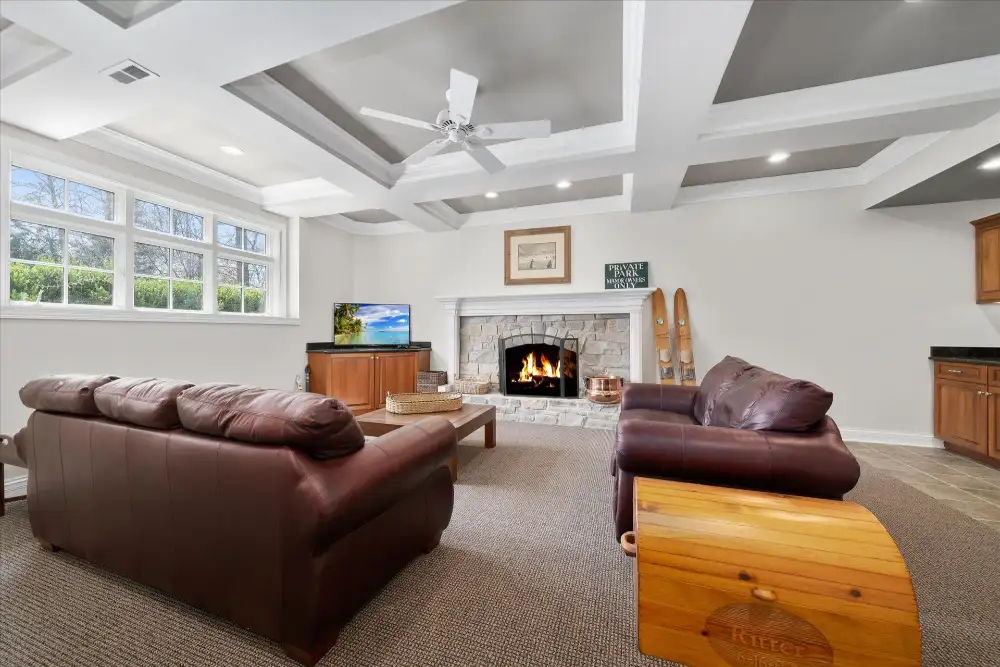
Entertainment spaces are among the most popular basement finishing ideas because basements naturally lend themselves to movie nights, game days, and relaxed gatherings. Since the lower level is often more private and separated from formal living areas, it can become a casual destination for family and guests.
A modern basement entertainment area may include:
A media wall with built-in cabinetry
A large sectional sofa
A projector or oversized television
Surround sound or concealed speakers
A wet bar or beverage center
A game table or billiards area
Custom shelving for decor, books, or collectibles
Sound-dampening materials for added comfort
For homeowners who enjoy hosting, a basement bar or kitchenette can make the space more convenient. Features such as an undercounter refrigerator, ice maker, sink, wine storage, dishwasher drawer, and custom cabinetry can elevate the lower level while reducing trips upstairs.
Guest spaces are another smart use for a finished basement. A private bedroom and bathroom can create a comfortable suite for visiting family or friends. When designed well, a basement guest suite can feel just as refined as an upstairs bedroom. Large windows where available, soft lighting, high-quality flooring, and warm finishes can make the space inviting. The same attention to detail we apply to bathroom remodeling throughout the home carries into every lower-level bath we design.
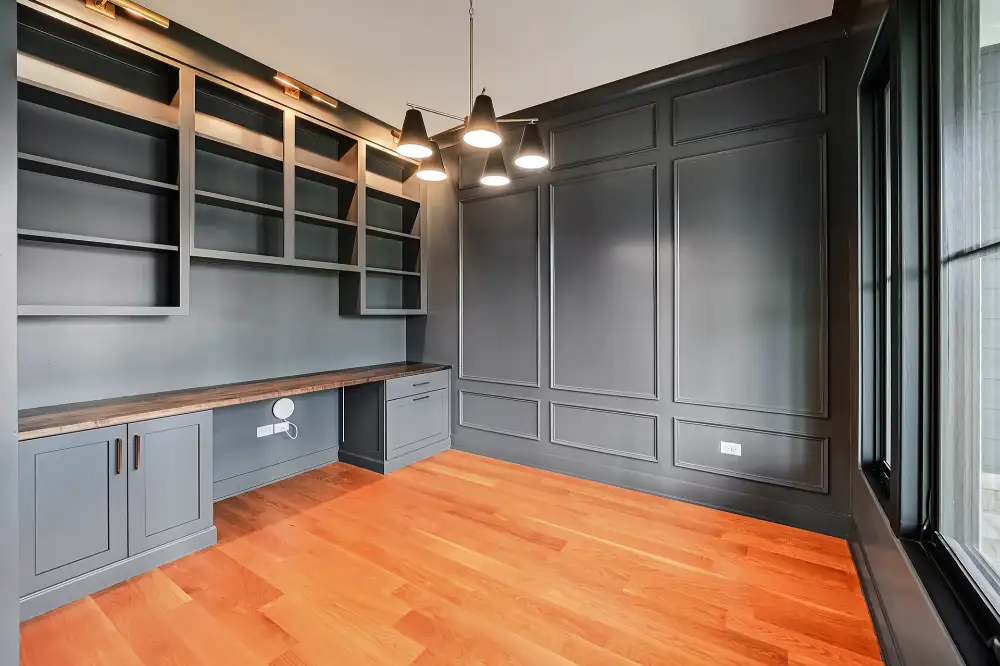
Home offices are also increasingly common in finished basements. A lower-level office can provide quiet separation from household activity, especially when designed with proper lighting and sound control. Built-in desks, storage cabinets, glass doors, and comfortable seating can make the office feel professional without feeling isolated.
A finished basement can also support specialty rooms, such as:
A home gym or yoga studio
A wine cellar or tasting room
A golf simulator room
A children’s playroom
A music room
A craft or hobby room
A private library
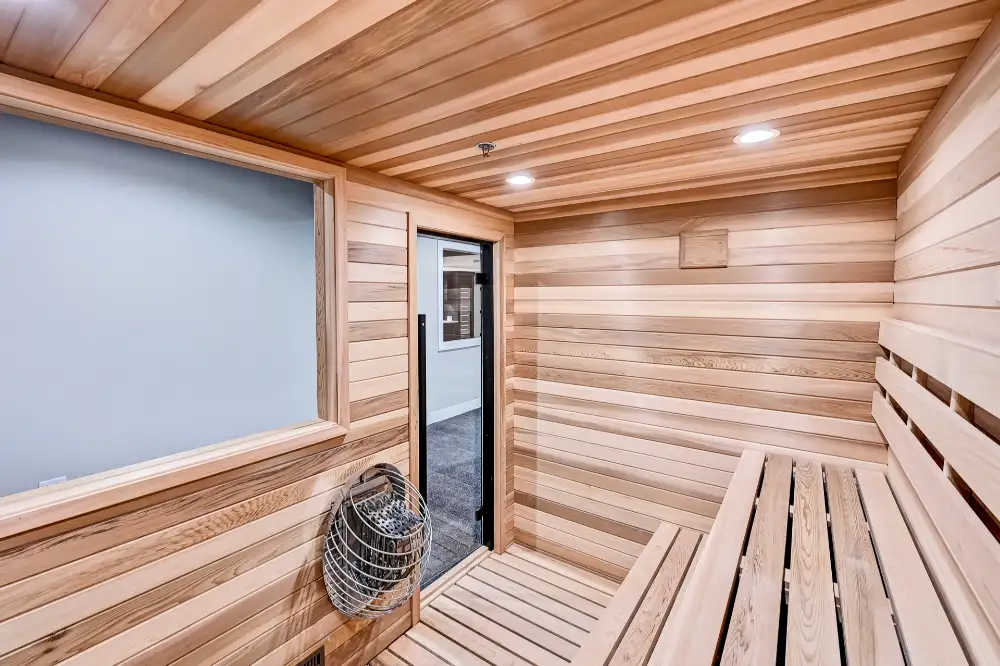
A wellness room or sauna area
For modern luxury homes, these personalized features can make the basement one of the most distinctive parts of the property. The key is to choose features that match both current needs and future lifestyle changes.
Planning a Basement Finish for Long-Term Use
A basement finish should not only look good today. It should also function well for years to come. Long-term planning means thinking about durability, comfort, adaptability, and maintenance. Since basements have unique conditions compared to above-grade rooms, proper planning is essential.
Before construction begins, homeowners should evaluate ceiling heights, existing plumbing, electrical capacity, HVAC needs, insulation, egress requirements, moisture history, and structural limitations. These details influence what can be built and how the final space will perform.
A well-planned basement finish should account for:
Future family needs
Aging-in-place considerations
Storage requirements
Guest accommodations
Technology and wiring
Heating and cooling comfort
Sound control
Access to utilities
Long-term material performance
For example, adding rough plumbing for a future bathroom or wet bar can be a wise decision even if the homeowner does not plan to install those features immediately. Similarly, wiring for speakers, smart home controls, additional outlets, or upgraded internet can prevent expensive changes later.
Another important factor is resale appeal. While highly personalized features can be enjoyable, the most valuable basement designs usually balance customization with broad functionality. A media room, bathroom, guest suite, office, or open recreation space can appeal to many future buyers because these rooms serve practical needs. If you are also weighing whether a basement finish or a luxury home addition makes more sense for your goals, our team can help you compare both options.
Lighting, Flooring, and Moisture Control
Lighting is one of the most important design elements in a finished basement. Since many basements have limited natural light, artificial lighting must be carefully planned. A single overhead fixture is rarely enough. Instead, modern basements benefit from layered lighting that includes recessed ceiling lights, sconces, task lighting, accent lighting, and decorative fixtures.
Effective basement lighting may include:
Recessed lights for general illumination
Wall sconces to add warmth and depth
LED strips under shelves or bar cabinets
Pendant lights over a bar or game table
Floor lamps for lounge areas
Dimmable controls for media rooms
Accent lighting for artwork or architectural details
The goal is to create a space that feels bright when needed and cozy when desired. Dimmers are especially useful because a basement may serve different purposes throughout the day, from work and exercise to entertaining and movie nights.
Flooring is another major consideration. Basement flooring should be durable, attractive, and suitable for below-grade conditions. Luxury vinyl plank is a popular choice because it can mimic the appearance of wood while offering strong moisture resistance. Engineered wood may also be appropriate in certain conditions, depending on the basement environment and installation method. Tile is another durable option, especially for bathrooms, bars, laundry areas, and walkout basements.
Common basement flooring options include:
Luxury vinyl plank for durability and moisture resistance
Engineered hardwood for a warm, upscale appearance
Porcelain tile for bathrooms and wet areas
Carpet tiles for playrooms or media rooms
Finished concrete for a sleek, modern look
Area rugs to add softness and define zones
Moisture control should always come before finishes. Even the most beautiful basement design can be compromised if water issues are not addressed. Proper drainage, waterproofing, insulation, vapor management, and ventilation help protect the investment. Homeowners should also choose materials that perform well in lower-level environments.
Important moisture-control steps may include:
Inspecting for past water intrusion
Addressing foundation cracks
Improving exterior drainage where needed
Using appropriate insulation
Installing moisture-resistant drywall in select areas
Choosing basement-friendly flooring
Maintaining sump pump systems
Ensuring adequate ventilation and humidity control
Comfort is also tied to temperature control. Basements can feel cooler than upper levels, so HVAC planning matters. Supplemental heating, properly placed vents, insulated walls, and good air circulation can make the finished space feel comfortable year-round.
More Basement Finishing Ideas for Modern Homes
Beyond the major layout and material decisions, small design choices can dramatically improve the finished result. A modern basement should feel intentional, not simply completed. Details such as built-ins, ceiling treatments, millwork, hardware, and furniture placement can make the difference between a basic finished basement and a refined lower-level living space.
Consider adding architectural features such as:
Coffered or tray ceiling details where height allows
Custom built-in cabinetry
Decorative wall paneling
Glass doors for offices or wine rooms
Stone or tile fireplace surrounds
Floating shelves
Hidden storage doors
Custom bar backsplashes
Statement lighting fixtures
Color selection also plays an important role. Light neutrals can make a basement feel larger and brighter, while deeper tones can create a cozy, dramatic atmosphere in media rooms, wine rooms, or lounges. A balanced palette often works best. For example, warm white walls, natural wood cabinetry, dark hardware, textured rugs, and soft accent lighting can create a sophisticated modern look.
Furniture should be scaled to the space. Oversized furniture can make a basement feel cramped, while pieces that are too small can make the room feel unfinished. Sectionals, modular seating, built-in benches, and flexible tables work well because they support different uses.
Storage should not be overlooked. Finished basements often become home to seasonal decor, sports equipment, games, tools, and extra household items. Instead of leaving storage as an unfinished leftover area, homeowners can incorporate custom closets, cabinetry, shelving, and hidden compartments. This keeps the basement clean and functional. To see how our team approaches the full scope of a project from the first conversation through construction, visit our concept and design process page.
FAQ
What is the best use for a finished basement?
The best use depends on your household’s lifestyle. Popular options include a family room, media room, guest suite, home office, gym, playroom, bar, or multipurpose recreation area. The most effective basement designs combine daily usefulness with long-term flexibility.
How do I make a basement feel more modern?
Use an open layout, layered lighting, clean-lined cabinetry, durable flooring, neutral colors, and finishes that coordinate with the rest of the home. Modern basement design should feel bright, comfortable, and connected to the home’s overall style.
What flooring works best in a finished basement?
Luxury vinyl plank, porcelain tile, engineered hardwood, carpet tiles, and finished concrete can all work well depending on the basement’s moisture conditions and intended use. Moisture resistance and durability should be top priorities.
Should I add a bathroom to my finished basement?
Yes, if space and plumbing allow. A basement bathroom adds convenience, supports guest accommodations, and can increase the functionality of the lower level. It is especially valuable when the basement includes a bedroom, entertainment area, gym, or office.
How can I make a basement brighter?
Use recessed lighting, sconces, accent lighting, light wall colors, mirrors, glass doors, and open sightlines. Dimmable fixtures and layered lighting help the basement feel bright during the day and comfortable in the evening.
Is moisture control necessary before finishing a basement?
Yes. Moisture control is essential before installing walls, flooring, cabinetry, or other finishes. Addressing drainage, foundation issues, humidity, and material selection helps protect the finished space and improve long-term performance.
Can a finished basement add value to a home?
A well-designed finished basement can add value by increasing usable living space and improving functionality. Spaces such as guest suites, bathrooms, entertainment rooms, and home offices are especially appealing when they are professionally designed and built.
Create a Luxury Finished Basement with Rite-Way Custom Homes
A finished basement can transform the way your home lives, adding comfort, beauty, and practical space for entertaining, working, relaxing, and hosting. The best basement finishing ideas are not one-size-fits-all. They are designed around your home, your lifestyle, and your long-term vision.
Rite-Way Custom Homes is a luxury home builder serving the western suburbs of Chicago, including Glen Ellyn, Wheaton, and the surrounding suburbs. For over 30 years, we have built some of the most beautiful homes in the area with a commitment to quality, integrity, personalized service, expert craftsmanship, and attention to detail.
Whether you are planning a custom home, expanding your living space with a luxury addition, or transforming your existing home with a major renovation, we can help bring your vision to life. From refined lower-level entertainment spaces to full-scale luxury basement renovations, our experienced team creates homes that reflect your style, meet your needs, and exceed your expectations.
Contact us today to start planning a finished basement or luxury renovation that adds lasting beauty, function, and value to your home.
A finished basement ROI can be strong when the project is planned strategically, built professionally, and aligned with what buyers in your local market actually value. For many homeowners, finishing a basement is not just about adding another room. It is about transforming underused square footage into a functional living space that can improve day-to-day comfort, strengthen resale appeal, and make a home feel more complete. While exact returns vary by location, layout, cost, and finish quality, many industry estimates place basement finishing returns around 60% to 75% of project cost, with higher returns possible when the new space is well designed and highly usable.
Does a Finished Basement Increase Home Value?
Yes, a finished basement can increase home value, but the increase is usually based on contributory value rather than a simple dollar-for-dollar increase. In other words, spending $100,000 on a basement renovation does not automatically raise the appraised value of the home by $100,000. The value depends on how the finished space improves the property’s utility, buyer appeal, and comparison to similar homes in the area.
A finished basement can increase value by creating space for features buyers want, such as:
A family room or media room
A guest suite
A home office
A workout area
A wine room or wet bar
A playroom
A full or half bathroom
Storage with finished, organized systems
Multi-generational living space
For homeowners in the western suburbs of Chicago, where families often prioritize flexible living areas, entertaining space, and high-quality home design, a finished basement can make a home feel significantly more functional. In communities such as Glen Ellyn, Wheaton, and surrounding suburbs, buyers may see a thoughtfully finished lower level as a meaningful advantage, especially when it complements the architecture and quality of the rest of the home. If your lower level renovation includes a bathroom, our team approaches it with the same attention to detail we bring to full bathroom remodeling projects throughout the home.
However, basement space is valued differently from the above-grade living area. Fannie Mae appraisal guidance requires below-grade areas to be reported separately, with finished rooms below grade reflected on a separate basement line in the appraisal rather than simply added to the home’s above-grade gross living area. This distinction matters because a finished basement can absolutely add value, but it may not be valued at the same price per square foot as a main-level addition or second-story expansion.
Understanding Finished Basement ROI in Today’s Market
Finished basement ROI is best understood as a combination of resale value, functional value, and marketability. From a resale perspective, homeowners commonly see a partial return on the money invested. From a lifestyle perspective, the return may be much higher because the family gets years of use from the space before selling.
In today’s market, where homeowners are often choosing to improve existing homes rather than move, basement renovations can be especially attractive. Compared with a major addition, finishing a basement can create substantial usable space without changing the home’s footprint. That can make the project more efficient, especially when the basement already has adequate ceiling height, good structural conditions, and access to plumbing or mechanical systems.
National remodeling data also shows that different renovation projects perform differently at resale. Zonda’s 2025 Cost vs. Value Report notes that exterior replacement projects continue to lead in resale ROI, while larger interior projects are often more subjective and tend to make the most sense for homeowners who plan to enjoy the home longer before selling. The same report also notes that newly added project categories, including basement remodels, show varying payoffs, with basement remodels proving comparatively consistent nationwide.
That is an important point. A basement renovation may not always top the ROI charts like a garage door replacement or manufactured stone veneer project, but it offers something those projects cannot: livable space. For the right home, a finished basement can help solve functional problems that buyers notice immediately during a showing.
For example, a luxury home with beautiful main-floor finishes but an unfinished basement may feel incomplete to a buyer expecting a turnkey property. A finished lower level with a recreation area, guest bedroom, bathroom, bar, and storage can create a more complete luxury experience.
What Impacts the Return on Investment of a Finished Basement?
The return on investment of a finished basement depends on several key variables. The most important factor is not simply whether the basement is finished, but whether it is finished well.
A basement that feels dark, chopped up, damp, or disconnected from the rest of the home may add limited value. A basement that feels intentional, comfortable, dry, bright, and consistent with the home’s overall design can become a major selling point.
Important ROI factors include:
Local buyer expectations: If finished basements are common in comparable homes nearby, leaving yours unfinished may weaken marketability.
Project cost: Overspending on features that buyers do not value can reduce ROI.
Finish quality: Materials and craftsmanship should match the price point of the home.
Layout: Open, flexible spaces often appeal to more buyers than overly specific rooms.
Ceiling height: Low ceilings can make a basement feel less valuable, even if it is technically finished.
Natural light: Larger windows, walkout access, and thoughtful lighting improve comfort and appeal.
Moisture control: Waterproofing, drainage, insulation, and ventilation should be addressed before cosmetic finishes.
Permits and code compliance: Proper permits help protect resale value and buyer confidence.
Bathroom addition: Adding a bathroom can improve functionality, especially if the basement includes a guest suite or entertainment area.
Design continuity: The lower level should feel like part of the home, not an afterthought.
The best basement renovations start with a strategy. Before selecting flooring, cabinetry, or lighting, homeowners should consider how the space will be used now and how it will be perceived later by buyers, appraisers, and real estate professionals.
How Finished Basement ROI Compares to Other Remodeling Projects
Finished basement ROI is often competitive with other interior remodeling projects, but it should be evaluated differently. A minor kitchen remodel, bathroom remodel, siding replacement, or deck addition can all produce measurable resale value, but they do not serve the same purpose. According to the 2024 Cost vs. Value Report, a midrange bath remodel recouped about 74% nationally, a composite deck addition recouped about 68%, and a major upscale kitchen remodel recouped about 38%. Similar dynamics apply across renovation types, where project scope and finish quality heavily influence what buyers are willing to pay at resale.
A finished basement often falls into a middle category. It may not always generate the highest percentage return, but it can dramatically change how a home lives. This is especially true for families who need more space but do not want to move or build a full addition.
A basement renovation can compare favorably when it:
Adds a bedroom and bathroom for guests or extended family
Creates a large entertainment space not available elsewhere in the home
Supports work-from-home needs
Improves storage and organization
Makes the home feel larger and more versatile
Brings an unfinished area up to the quality level of the rest of the property
For luxury homes, the comparison is not only about percentage ROI. It is also about buyer expectations. A high-end buyer may expect the lower level to include finished entertainment space, a fitness room, guest accommodations, or premium storage. In that context, finishing the basement may help the home compete more effectively.
Quality, Layout, and Permits: Factors That Affect Basement Appraisal
Appraisal outcomes are strongly influenced by how the basement is categorized, documented, and compared to similar homes. Because finished below-grade space is generally reported separately from above-grade living area, homeowners should not assume that every finished square foot will be valued the same way as main-level square footage. Fannie Mae guidance states that below-grade areas should be reported separately, with appropriate adjustments made for basement and finished rooms below grade in the sales comparison approach.
That does not mean basement space lacks value. It means the value must be supported by the market. If comparable homes in the area have finished basements and buyers consistently pay more for them, an appraiser can account for that contributory value. The stronger the quality, functionality, and comparability of the space, the more persuasive the value contribution may be.
Permits also matter. A permitted basement renovation gives buyers greater confidence that electrical, plumbing, structural, and life-safety work was completed properly. This is especially important if the renovation includes bedrooms, bathrooms, egress windows, wet bars, fireplaces, or major mechanical changes.
Quality and layout can affect appraisal and resale in several ways:
A full bathroom can make the space more functional.
A legal bedroom or guest suite may increase buyer appeal.
Egress windows improve safety and livability.
Consistent flooring, trim, doors, and lighting make the basement feel integrated.
A logical layout improves flow and avoids wasted space.
Proper HVAC design keeps the lower level comfortable.
Professional craftsmanship supports buyer confidence.
A finished basement should not feel like a collection of leftover spaces. It should feel planned, intentional, and appropriate for the home’s price point.
When a Finished Basement May Not Deliver Strong ROI
A basement renovation may not deliver a strong ROI when the project is poorly timed, poorly designed, or misaligned with the home’s value and market. Even a beautiful renovation can underperform financially if the cost is too high relative to the home’s resale potential.
A finished basement may produce a weaker ROI when:
The home has unresolved foundation, drainage, or moisture issues.
Ceiling heights are too low for comfortable use.
The layout is awkward or overly customized.
The finishes are far below the quality of the rest of the home.
The finishes are so expensive that future buyers will not pay a premium for them.
The renovation was completed without proper permits.
The local market does not strongly reward finished below-grade space.
The project removes too much storage or mechanical access.
The homeowner plans to sell immediately and cannot enjoy the space.
Over-customization is one of the biggest risks. A golf simulator, theater, wine cellar, or specialized hobby room may be valuable to the current homeowner, but not every buyer will assign equal value to it. These features can still make sense in a luxury home, but they should be designed with flexibility whenever possible. For homeowners weighing a basement renovation against expanding above grade, our luxury home additions page outlines what that process involves and when it makes more sense.
For example, a home theater that can also function as a lounge or media room may appeal to more buyers than a highly specific room with fixed seating and limited alternative use. A wet bar with timeless cabinetry and quality surfaces may age better than a trend-driven design that feels dated in a few years.
FAQ
Does a finished basement count as square footage?
A finished basement adds usable living space, but below-grade space is typically reported separately from above-grade gross living area in an appraisal. It can still add value, but it may not be valued at the same rate as above-grade space.
What is the average finished basement ROI?
Many estimates place finished basement ROI around 60% to 75%, depending on market conditions, project cost, quality, and layout. Higher-end results are possible when the basement is well designed and strongly aligned with buyer demand.
Is it better to finish a basement or build an addition?
It depends on your goals. A basement renovation can be more efficient because it uses existing space, while an addition can add above-grade square footage that may appraise differently. A design-build professional can help compare cost, value, and feasibility.
Does adding a bathroom improve finished basement ROI?
Often, yes. A bathroom can make the basement more functional, especially if the space includes a guest suite, entertainment area, gym, or family room. The value depends on construction cost and buyer expectations.
Do permits matter for a finished basement?
Yes. Permits help document that the work was completed according to applicable standards. Unpermitted work can create concerns during appraisal, inspection, financing, and resale.
What basement features add the most value?
The most valuable features are typically those with broad buyer appeal, such as open recreation space, a bathroom, guest accommodations, high-quality lighting, durable flooring, storage, and a layout that feels connected to the rest of the home.
When does finishing a basement make financial sense?
It makes the most sense when the home has a dry, structurally sound basement, the renovation cost is proportionate to the home’s value, the layout solves real lifestyle needs, and similar homes in the area support the investment.
Partner with Rite-Way Custom Homes for a Basement Renovation Built Around Long-Term Value
A finished basement can increase home value, but the strongest results come from thoughtful planning, quality construction, and a clear understanding of how the space will function today and support resale tomorrow. For luxury homeowners, the goal is not simply to finish the basement. The goal is to create a lower level that feels intentional, comfortable, beautifully crafted, and fully aligned with the rest of the home.
Rite-Way Custom Homes is a luxury home builder and renovation partner serving the western suburbs of Chicago, including Glen Ellyn, Wheaton, and surrounding communities. At Rite-Way Custom Homes, we specialize in extraordinary custom homes, luxury home additions, and major renovations designed around craftsmanship, integrity, and long-term property value.
Whether you are considering a finished basement, a major home renovation, a luxury addition, or a custom home built from the ground up, our experienced team can help you make smart design and construction decisions from the start. You can also explore our concept and design process to understand how we approach every project from the first conversation through completion. For over 30 years, we have built some of the most beautiful homes in the western suburbs of Chicago, with a commitment to personalized service and exceptional attention to detail.
Contact us today to schedule a consultation and explore how a strategic basement renovation can enhance your home’s comfort, marketability, and long-term value.
If you have ever looked at your unfinished or underused basement and thought about turning it into something more functional, you are not alone. Basements hold incredible potential. Whether you are envisioning a cozy living space, a home office, a guest suite, or even a full entertainment area, the possibilities are wide open. However, before you start picking out flooring or sketching layouts, there is one big question that tends to come up right away. Do you actually need a basement remodeling contractor, or can you handle the project on your own?
From our experience working with homeowners, this is where many projects either start strong or quickly run into avoidable challenges. Basement remodeling is not just about aesthetics. It involves structural planning, moisture control, electrical work, and code compliance, all of which require careful attention. While some smaller updates might be manageable on your own, a full remodel often benefits greatly from professional oversight. Let’s walk through when hiring a contractor makes sense, what risks come with DIY remodeling, and how working with a professional can help you get the results you are truly looking for.
When to Hire a Basement Remodeling Contractor
Not every project requires outside help, but basement remodeling tends to fall into a category where professional guidance can make a significant difference. The moment your project moves beyond simple cosmetic updates, it is worth considering bringing in a basement remodeling contractor.
If your plans include adding walls, installing plumbing, upgrading electrical systems, or creating livable square footage, a contractor becomes essential. These types of changes require coordination across multiple trades, and even small missteps can lead to costly corrections later on.
How a Basement Remodeling Contractor Manages Projects
One of the biggest advantages of working with a basement remodeling contractor is project management. Instead of juggling multiple vendors, timelines, and responsibilities on your own, you have a single point of contact who oversees the entire process.
From our perspective, this includes:
Coordinating electricians, plumbers, and other specialists
Scheduling inspections and ensuring work meets local requirements
Managing material sourcing and delivery
Keeping the project on track from start to finish
This level of organization is what keeps projects moving forward smoothly. Without it, delays and miscommunication can quickly pile up.
Code Compliance and Structural Considerations
Basement remodels often involve more than meets the eye. Behind every finished wall or ceiling is a network of systems that must meet strict building codes.
Working with a basement remodeling contractor ensures that:
Proper permits are obtained
Egress windows are installed where required
Ceiling heights meet local standards
Electrical and plumbing systems are safely integrated
Ignoring these details can result in failed inspections or even safety risks. Having a professional handle compliance from the start helps you avoid these issues entirely.
Risks of DIY Basement Remodeling
There is no shortage of online tutorials and inspiration for DIY projects, and for smaller updates, they can be helpful. However, basement remodeling introduces complexities that go far beyond surface-level improvements.
One of the most common risks we see is underestimating moisture management. Basements are naturally more prone to dampness, and without proper waterproofing and ventilation, you could end up dealing with mold, mildew, or long-term structural damage.
Other risks include:
Improper electrical work that creates safety hazards
Inadequate insulation leading to energy inefficiency
Poor layout planning that limits functionality
Unexpected structural issues that go unnoticed
These challenges often lead homeowners to call in a basement remodeling contractor after the fact, which can increase overall costs compared to starting with professional guidance from the beginning.
What a Professional Basement Remodel Includes
A professionally managed basement remodel is about much more than finishing walls and installing flooring. It is a comprehensive process designed to transform your space into something that is both functional and long-lasting.
Design That Works for Your Lifestyle
Before any construction begins, we focus on understanding how you plan to use the space. This allows us to create a layout that supports your daily routine and long-term needs.
Whether you are looking for:
A home theater or entertainment area
A private guest suite
A home gym or office
Additional family living space
The design phase ensures everything is thoughtfully planned before work begins.
Structural and System Integration
Basement remodeling often involves integrating new systems with existing ones. This includes:
Extending HVAC systems for proper heating and cooling
Installing or upgrading plumbing for bathrooms or wet bars
Adding electrical circuits for lighting and outlets
Each of these elements must be carefully coordinated to ensure performance and safety.
High-Quality Finishes and Materials
Choosing the right materials is especially important in a basement environment. Moisture-resistant flooring, proper insulation, and durable finishes all play a role in how your space performs over time.
We help guide these decisions so you get a finished result that not only looks great but also holds up to everyday use.
Budgeting and Timeline Management
One of the biggest concerns homeowners have about basement remodeling is cost. Without a clear plan, expenses can quickly exceed expectations.
Creating a Realistic Budget
Working with a basement remodeling contractor allows you to build a detailed budget from the start. This includes:
Labor and materials
Permit and inspection fees
Design and planning costs
Contingency funds for unexpected issues
Having a clear financial plan helps you make informed decisions and avoid surprises along the way.
Keeping the Project on Schedule
Timelines are just as important as budgets. A well-managed project follows a structured schedule that accounts for each phase of the remodel.
This includes:
Demolition and preparation
Framing and structural work
Electrical and plumbing installation
Finishing and final inspections
By coordinating these steps efficiently, we help ensure your project stays on track and moves forward without unnecessary delays.
Frequently Asked Questions
Can I remodel my basement without a contractor? While it is possible for smaller projects, most full basement remodels benefit from professional oversight due to structural, electrical, and code requirements.
How long does a basement remodel take? Timelines vary depending on the scope of the project, but most remodels take several weeks to a few months.
What adds the most value to a basement remodel? Adding livable space, such as a bedroom, bathroom, or entertainment area, typically provides the highest return.
Do basement remodels require permits? Yes, most projects require permits, especially if they involve structural, electrical, or plumbing changes.
Is basement remodeling a good investment? In many cases, yes. A well-designed basement can significantly increase both usable space and overall home value.
Let’s Bring Your Basement Vision to Life
Taking on a basement remodel is an exciting opportunity to completely transform part of your home, but it is also a project that benefits from the right expertise. From managing complex systems to ensuring everything meets code and performs as it should, working with a basement remodeling contractor gives you confidence every step of the way.
At Rite-Way Custom Homes, we take pride in helping homeowners turn underutilized basements into spaces that truly enhance their homes. Our team brings years of experience in custom home building and remodeling, focusing on quality craftsmanship, thoughtful design, and clear communication throughout the entire process. Whether you have a clear vision or are just starting to explore ideas, we work closely with you to create a finished space that fits your lifestyle and adds lasting value to your home.
If you are ready to take the next step, we invite you to connect with our team. Visithttps://ritewaycustomhomes.com/ to learn more about our services or to schedule a consultation. Let’s create a basement space that feels just as intentional and inviting as the rest of your home.
Designing a kitchen in a custom home offers a rare opportunity to create a space that is both highly functional and visually striking. Unlike standard renovations that must work within existing limitations, kitchen remodeling ideas for custom homes allow homeowners to shape every detail around their lifestyle, preferences, and long-term goals. From expansive layouts and bespoke cabinetry to integrated technology and premium finishes, the right approach ensures the kitchen becomes the heart of the home while enhancing comfort, efficiency, and overall property value.
Custom homes in the western suburbs of Chicago often emphasize spacious living, architectural character, and thoughtful design. The kitchen should complement these qualities while supporting how families cook, entertain, and gather. Below, we explore the best kitchen remodeling strategies that align with custom home layouts, focusing on functionality, aesthetics, and enduring value.
Kitchen Remodeling Ideas Designed for Custom Homes
A custom home offers the flexibility to tailor the kitchen to fit both the architectural style of the residence and the personal routines of the homeowner. Instead of adapting to a preexisting footprint, you can design the kitchen as an integrated part of the overall floor plan.
Some of the most effective kitchen remodeling concepts for custom homes include:
Open concept layouts that seamlessly connect the kitchen to living and dining spaces
Oversized islands that function as prep areas, seating zones, and gathering hubs
Walk-in pantries or secondary prep kitchens for entertaining
Floor-to-ceiling cabinetry that maximizes vertical storage
Statement range hoods or architectural ceiling details that anchor the room
In luxury custom homes, kitchens often serve multiple purposes. They are culinary workspaces, social centers, and design focal points. By prioritizing both beauty and performance, homeowners can create a kitchen that enhances daily living while reflecting refined taste.
Design continuity is also critical. The kitchen should feel cohesive with adjacent spaces. This may include matching millwork details, complementary flooring materials, or sightlines that draw attention to architectural features such as coffered ceilings or custom built-ins.
Layout and Functionality Considerations
The layout is the foundation of any successful kitchen remodel. In a custom home, the layout can be designed from the ground up to accommodate how you live.
Key considerations include:
The work triangle between the sink, refrigerator, and cooktop
Traffic flow for family members and guests
Dedicated zones for cooking, prep, cleanup, and storage
Accessibility for future needs
For larger custom homes, many homeowners opt for expanded layouts such as L-shaped or U-shaped kitchens with a central island. Others may choose a galley-style kitchen with parallel workstations that maximize efficiency.
Smart Kitchen Remodeling Ideas for Custom Homes
Modern kitchens increasingly integrate technology and convenience features that enhance usability.
Smart design elements may include:
Touchless faucets and voice-activated lighting
Built-in charging stations and concealed outlets
Smart refrigerators with inventory tracking
App-controlled ovens and cooktops
Automated window treatments
These features not only simplify everyday tasks but also future-proof the kitchen. As technology continues to evolve, incorporating adaptable infrastructure ensures your kitchen remains current and efficient for years to come.
Thoughtful planning also involves considering natural light. Large windows, skylights, or glass doors can brighten the kitchen while creating a welcoming atmosphere. In custom homes, positioning the kitchen to capture outdoor views can further enhance the sense of openness and connection.
Choosing Materials and Finishes for Custom Kitchens
Materials define the look and longevity of a kitchen. In custom homes, high-quality finishes are an investment in both style and durability.
Popular countertop options include:
Quartz for its low maintenance and durability
Natural stone such as marble or granite for timeless elegance
Quartzite for a blend of strength and luxury appeal
Cabinet finishes may range from painted wood in classic whites and soft neutrals to rich stained finishes that highlight natural grain. Two-tone cabinetry is another common choice, pairing lighter upper cabinets with darker base units for visual contrast.
Flooring must balance aesthetics with practicality. Hardwood floors create warmth and continuity throughout open floor plans. Porcelain tile offers durability and moisture resistance. Engineered hardwood provides stability in climates with seasonal temperature fluctuations.
Backsplashes present an opportunity to introduce texture and personality. Options include:
Full height slab backsplashes for a seamless look
Handcrafted tile for artisanal character
Patterned tile to add subtle visual interest
When selecting materials, consider maintenance requirements, longevity, and how each finish interacts with natural and artificial lighting. The goal is to achieve a cohesive design that withstands daily use while maintaining its visual appeal.
Custom Cabinetry and Storage Solutions
Custom cabinetry is one of the defining features of a luxury kitchen. Unlike stock options, custom cabinets are tailored to your specific layout and storage needs.
Effective storage solutions may include:
Deep drawers for pots and pans
Pull out spice racks and pantry shelves
Built-in utensil organizers
Appliance garages to reduce countertop clutter
Hidden trash and recycling compartments
In larger custom homes, homeowners may incorporate specialty storage such as wine racks, coffee stations, or display cabinets with glass fronts. Floor-to-ceiling cabinetry not only maximizes space but also creates a polished, architectural appearance.
Attention to detail is critical. Soft close hinges, dovetail joinery, and custom hardware elevate the cabinetry from functional to exceptional. These elements contribute to long term durability and reinforce the overall sense of craftsmanship.
Integrating Appliances and Lighting
High-performance appliances are central to modern kitchen design. In custom homes, appliances are often selected for both professional-grade capability and visual harmony.
Integrated appliances allow refrigerators and dishwashers to blend seamlessly with cabinetry panels. Built-in ovens and microwave drawers create a streamlined aesthetic while optimizing workflow.
Common appliance upgrades include:
Professional-grade gas ranges
Induction cooktops
Double ovens for entertaining
Built-in beverage centers
Under-counter refrigeration
Lighting is equally important. A layered lighting approach ensures functionality and ambiance.
This typically includes:
Task lighting under cabinets
Pendant lights over islands
Recessed ceiling fixtures for general illumination
Accent lighting inside glass cabinets
Dimmers and smart controls allow homeowners to adjust brightness according to the time of day or occasion. Proper lighting not only enhances safety and efficiency but also highlights design features and materials.
Long Term Value and Return on Investment
A well-designed kitchen consistently ranks among the most valuable improvements in a home. In custom residences, thoughtful kitchen remodeling can significantly enhance resale potential while providing daily enjoyment.
Factors that contribute to long-term value include:
Timeless design choices rather than overly trendy finishes
High-quality materials and craftsmanship
Energy-efficient appliances
Flexible layouts that adapt to evolving needs
Buyers in the western suburbs of Chicago often prioritize kitchens that combine sophistication with practicality. By investing in enduring design and expert construction, homeowners can enjoy both immediate satisfaction and lasting equity.
Frequently Asked Questions
How large should a kitchen island be in a custom home?
It depends on the overall layout, but many custom homes feature islands at least 7 to 10 feet long to accommodate seating and prep space.
Are open concept kitchens still popular?
Yes. Open layouts remain highly desirable for entertaining and family interaction.
What countertop material offers the best durability?
Quartz is widely favored for its resistance to stains and minimal maintenance requirements.
Should appliances be fully integrated?
Integrated appliances create a seamless look, but the choice depends on aesthetic preference and budget.
How can I future-proof my kitchen design?
Incorporate smart technology, flexible storage, and timeless materials to ensure longevity.
Bring Your Custom Kitchen Vision to Life
Designing a kitchen that aligns perfectly with your custom home requires expertise, craftsmanship, and a commitment to excellence. Rite-Way Custom Homes has been building and transforming extraordinary residences in the western suburbs of Chicago for over 30 years. From Glen Ellyn and Wheaton to surrounding communities, our team specializes in luxury custom homes, high-end additions, and major renovations tailored to your unique vision.
Whether you are building your dream home from the ground up or planning a comprehensive kitchen renovation, we bring meticulous attention to detail, superior materials, and personalized service to every project. Our reputation for quality and integrity has made us a trusted name in luxury home building throughout the region.
If you are ready to create a kitchen that reflects your lifestyle and enhances your custom home, contact us to schedule a consultation. Let Rite-Way Custom Homes help you design and build a space that exceeds expectations and stands the test of time.
A kitchen remodeling contractor can transform one of the most important rooms in your home into a space that blends beauty, function, and long-term value. But when the proposal comes from a high-end professional with a premium price tag, many homeowners pause and ask the same question: Is it really worth the cost? The answer depends on your goals, your home’s current condition, and the level of craftsmanship you expect. For homeowners who value exceptional design, flawless execution, and a seamless experience, hiring a high-end contractor is often one of the smartest investments they can make.
Your kitchen is more than a place to cook. It is where family gathers, guests linger, and daily routines unfold. In luxury homes, the kitchen sets the tone for the entire property. Choosing the right professional to lead your renovation directly impacts not only the outcome but also your peace of mind throughout the process.
What Defines a High-End Kitchen Remodeling Contractor?
Not all contractors operate at the same level. A high-end kitchen remodeling contractor offers far more than basic installation services. They deliver a comprehensive, design-driven experience built on expertise, quality materials, and meticulous attention to detail.
Key characteristics of a high-end contractor include:
Extensive experience in luxury residential remodeling • A portfolio of custom kitchens with premium finishes and complex layouts • Strong relationships with top-tier suppliers and craftsmen • In-house or collaborative design expertise • Detailed project management and scheduling systems • Transparent communication and budgeting processes
High-end contractors often work with architects, interior designers, and specialty trades to create cohesive spaces that align with the home’s architectural style. They are skilled at integrating custom cabinetry, high-performance appliances, specialty lighting, stonework, and millwork into a unified design.
They also understand that a luxury kitchen remodel is not simply about replacing cabinets and countertops. It may involve structural modifications, reconfiguring floor plans, upgrading mechanical systems, or expanding into adjacent spaces. A contractor operating at this level has the technical knowledge to coordinate all of these elements without compromising quality.
Benefits of Hiring a Specialized Remodeling Professional
While a general contractor may handle standard renovations, a specialized kitchen remodeling professional brings focused expertise that can significantly improve both the experience and the final result.
Some of the most important benefits include:
Elevated design solutions tailored to your lifestyle • Access to premium materials and custom fabrication • Greater attention to detail in installation and finishing • Comprehensive project oversight from concept to completion • Reduced risk of costly mistakes or rework
A specialized contractor understands the nuances of kitchen design, such as workflow efficiency, appliance placement, lighting layers, storage optimization, and material durability. They help homeowners avoid common pitfalls like poorly positioned islands, insufficient ventilation, or mismatched finishes.
Another major benefit is coordination. Luxury kitchen projects often involve multiple trades, including electricians, plumbers, tile setters, cabinet makers, and painters. A seasoned remodeling contractor orchestrates these teams with precision, ensuring that timelines stay on track and quality standards remain consistent.
Beyond technical skills, experienced professionals bring clarity and confidence to the process. They anticipate challenges before they arise and offer proactive solutions that protect your investment.
Signs You Need a High-End Kitchen Remodel
Not every kitchen update requires premium expertise. However, certain circumstances make hiring a high-end contractor especially valuable.
You may need a high-end kitchen remodel if:
Your home is a custom or luxury property, and the kitchen no longer matches its overall quality • You plan to remove walls or reconfigure the layout • You want custom cabinetry, specialty finishes, or unique architectural details • You are investing in high-performance appliances and integrated systems • You expect a seamless, white-glove renovation experience
Older homes in established neighborhoods often present additional complexities. Outdated wiring, plumbing limitations, structural constraints, or uneven surfaces require careful evaluation and correction. A high-end contractor is equipped to address these issues without cutting corners.
If you are planning to stay in your home long term, the value of premium craftsmanship becomes even more significant. High-quality materials and expert installation ensure durability and timeless appeal.
How a High-End Kitchen Remodeling Contractor Adds Value
A luxury kitchen remodel should enhance both daily living and overall property value. A high-end contractor adds measurable value in several ways.
First, they elevate design quality. Thoughtful layouts improve flow, maximize storage, and create visual balance. Strategic lighting enhances both function and ambiance. Custom details such as paneled appliances, integrated shelving, or handcrafted range hoods add sophistication.
Second, they improve structural and mechanical performance. Proper insulation, ventilation, and energy-efficient systems contribute to comfort and long-term savings. These behind-the-scenes upgrades may not be immediately visible, but they significantly impact performance and longevity.
Third, they protect resale potential. In competitive real estate markets, kitchens often determine buyer perception. A beautifully executed, professionally designed kitchen stands out and justifies premium pricing. Poor workmanship or dated finishes can quickly diminish perceived value.
Finally, a reputable contractor enhances the remodeling experience itself. Clear communication, organized scheduling, and respect for your home reduce stress and disruption.
Craftsmanship, Design, and Project Oversight
High-end remodeling is defined by craftsmanship. Precision cabinet installation, seamless stone fabrication, perfectly aligned tile work, and custom millwork require skilled artisans who take pride in their work.
Attention to craftsmanship shows in details such as:
Tight, even reveals around cabinetry • Flawless paint and finish application • Smooth transitions between materials • Consistent grout lines and tile alignment • Properly fitted hardware and fixtures
Design is equally important. A skilled contractor collaborates with designers to ensure that aesthetic vision aligns with construction realities. They understand how material choices, color palettes, and textures work together to create harmony.
Project oversight ties everything together. A dedicated project manager monitors progress, coordinates trades, inspects quality, and keeps the homeowner informed. This level of supervision prevents miscommunication and ensures accountability at every stage.
Without strong oversight, even the best designs can suffer from execution issues. Premium contractors prioritize organization and communication as much as craftsmanship.
Cost vs Long Term Investment Considerations
High-end kitchen remodeling comes with a higher upfront cost. However, evaluating the decision solely on price can be misleading. Instead, consider the long-term investment.
Premium materials such as custom hardwood cabinetry, natural stone countertops, and professional-grade appliances offer durability that outlasts lower-cost alternatives. Skilled installation reduces the likelihood of premature wear, water damage, or structural issues.
There are also intangible returns:
Improved daily functionality • Enhanced enjoyment of your home • Increased pride in ownership • Greater appeal to future buyers
When mistakes occur in budget renovations, corrective work can be expensive and disruptive. Replacing warped cabinets, repairing improperly installed tile, or addressing ventilation problems often costs more than doing it right the first time.
In established, high-value neighborhoods, a subpar kitchen remodel can actually detract from property value. A high-end contractor ensures that your investment aligns with the expectations of your market.
Ultimately, the question is not simply whether a kitchen remodeling contractor is worth the cost. It is whether the quality, expertise, and peace of mind they provide justify the investment. For homeowners seeking exceptional results, the answer is often yes.
Frequently Asked Questions
How much more does a high-end kitchen remodeling contractor cost?
Costs vary by scope and materials, but premium contractors typically charge more due to expertise, custom work, and higher quality finishes.
Is hiring a designer separate from a contractor necessary?
Many high-end contractors collaborate with or include design services to ensure a cohesive result.
Will a luxury kitchen remodel increase home value?
In most cases, a well-executed remodel enhances both market appeal and resale potential.
How long does a high-end kitchen remodel take?
Timelines depend on complexity, but comprehensive renovations often take several months from planning to completion.
Can I live in my home during the remodel?
Often yes, though there will be disruptions. An experienced contractor helps minimize inconvenience.
Transform Your Kitchen with Proven Expertise
If you are considering a luxury kitchen renovation in the western suburbs of Chicago, partnering with an experienced builder makes all the difference. Rite-Way Custom Homes brings more than 30 years of experience crafting extraordinary custom homes, luxury additions, and major renovations throughout Glen Ellyn, Wheaton, and the surrounding communities.
At Rite-Way Custom Homes, we specialize in delivering exceptional results through expert craftsmanship, thoughtful design, and personalized service. Whether you are building your dream home from the ground up, expanding your living space, or transforming your existing kitchen with high-end renovations, our team is committed to bringing your vision to life with integrity and attention to detail.
Let us help you create a kitchen and home that reflect your style, support your lifestyle, and exceed your expectations. Contact us to begin planning your next project with a trusted leader in luxury home building.