The team at Rite-Way Custom Homes brings decades of combined experience in custom home building, luxury renovations, and thoughtful design to every project. From concept design and custom home construction to kitchen and bathroom remodeling, home additions, and basement finishing, our team is dedicated to helping homeowners create spaces that are both beautiful and built to last. We share practical insights, design trends, and expert advice to help you make informed decisions about your next home project.
In today’s competitive real estate market, luxury townhomes have emerged as one of the most sought-after options for buyers who want sophisticated design, premium finishes, and low-maintenance living without sacrificing space or quality. While a standard townhome may satisfy basic needs, a luxury build represents an entirely different standard of craftsmanship, personalization, and long-term value. For anyone evaluating higher-end properties in the western suburbs of Chicago, understanding these differences is essential before making one of the most significant investments of your life.
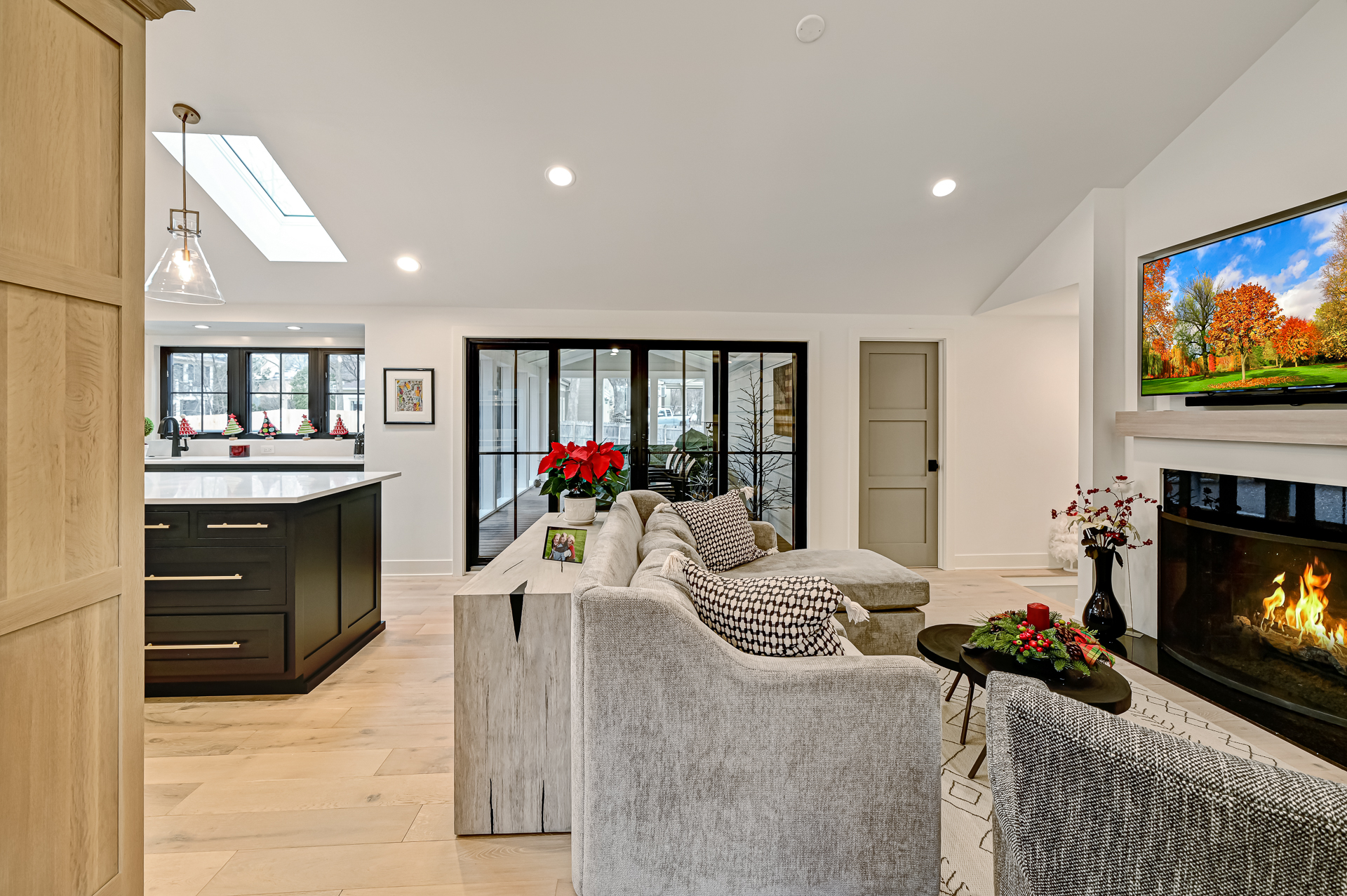
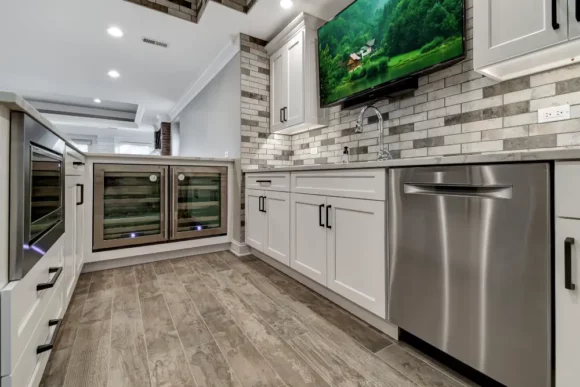
Custom kitchen and open living space in a Rite-Way luxury townhome in the western suburbs of Chicago
Architectural Design and Curb Appeal in Luxury Townhomes
One of the most immediate distinctions between luxury townhomes and standard builds is architectural presence. Standard townhomes are designed for efficiency and repetition, which often results in uniform exteriors and limited visual distinction from unit to unit. Luxury townhomes prioritize architectural integrity and timeless design that makes an individual statement while fitting harmoniously into the surrounding neighborhood.
What Sets Luxury Townhome Exteriors Apart
Custom-designed facades in luxury construction blend seamlessly with their surroundings while expressing a clear sense of identity. Builders operating at a luxury level approach each unit as a distinct architectural composition rather than a variation on a repeated production template.
Key architectural features that distinguish luxury townhomes from standard builds include:
Varied rooflines and custom elevations to eliminate repetitive visual patterns
High-quality exterior materials including natural stone, full brick, and architectural metal panels
Thoughtful landscaping that enhances curb appeal and complements the home’s overall design language
Custom window configurations and proportions designed around interior light rather than exterior cost
Design Styles Common to Luxury Townhome Construction
Luxury townhomes in communities like Glen Ellyn and Wheaton frequently draw from transitional, craftsman, and contemporary architectural vocabularies. The result is a home that remains visually appealing for decades rather than appearing dated within a few years of construction.
Superior Construction Materials and Craftsmanship Standards
Standard townhomes are typically built with cost efficiency as the primary constraint, which often means materials that meet minimum building code requirements without exceeding them. Luxury townhomes take a fundamentally different approach: durability, performance, and craftsmanship guide every decision from the foundation to the finishes.
Higher quality framing, insulation, roofing, and exterior cladding contribute to better energy efficiency, reduced long-term maintenance costs, and structural integrity that holds up over decades. Inside the home, craftsmanship becomes even more evident through fine woodworking, custom millwork, and precision installation practices that are simply not economically viable in production builds.
Common Material Upgrades Found in Luxury Townhomes
Solid core doors with custom trim profiles and hardware
Premium engineered or site-finished hardwood flooring throughout main living areas
Hand-finished cabinetry built for both longevity and daily function
High-performance windows and exterior doors rated for energy efficiency and durability
Commercial-grade roofing assemblies with extended manufacturer warranties
According to the National Association of Home Builders, homes built with higher-grade materials and construction methods consistently outperform production builds in both resale value and long-term maintenance costs. This is a core reason why buyers who are focused on the total cost of ownership tend to favor luxury construction over entry-level alternatives.
Spacious and Thoughtfully Designed Floor Plans
Another defining feature of luxury townhomes is the philosophy behind space planning. Standard townhomes rely on predictable layouts designed to fit the maximum number of units into a development footprint. Luxury townhomes focus instead on livability, flow, and the way a space actually feels to the people living in it day to day.
Finished lower-level living space with fireplace in a Rite-Way custom home in Glen Ellyn
Open concept living areas in luxury builds are designed with intentional zoning, allowing spaces to feel expansive yet purposeful. Ceiling heights are typically taller, creating a greater sense of volume and allowing more natural light to reach the interior. Storage is thoughtfully integrated throughout the home rather than treated as an afterthought.
Floor Plan Features That Define Luxury Townhome Living
Expansive kitchens designed for entertaining as well as everyday use
Primary suites with spa-inspired bathrooms and generously sized walk-in closets
Flexible bonus spaces including home offices, fitness rooms, and private media lounges
Finished lower levels that function as true living space, not basic utility storage
Mudroom and entry sequences designed for real-world family use
How Floor Plan Flexibility Compares Across Build Types
One of the clearest advantages of working with a luxury builder is the ability to modify a floor plan to fit your life. The experience of personalizing a townhome layout closely parallels the process of working on a fully custom project. Builders like Rite-Way Custom Homes apply the same concept design process used in custom single-family home construction to ensure that every luxury townhome reflects the client’s actual priorities rather than a builder’s default assumptions.
High-End Kitchens and Bathrooms
Kitchens and bathrooms are where the difference between luxury and standard builds becomes most visible. Standard townhomes are typically equipped with builder-grade fixtures and a limited selection of finish packages. Luxury townhomes treat these spaces as the design focal points they actually are, investing in quality that elevates every interaction with the home.
Kitchen and Bathroom Features That Distinguish Luxury Townhomes
Luxury kitchens typically feature custom cabinetry, premium countertops such as quartzite, marble, or engineered stone, and professional-grade appliances integrated seamlessly into the overall design. Layouts are planned with both function and form in mind, making them as practical for daily meals as they are impressive for entertaining guests.
Luxury bathroom features commonly include:
Large-format tile or natural stone wall and floor surfaces with minimal grout lines
Freestanding soaking tubs and walk-in showers with curbless, barrier-free access
High-end plumbing fixtures in refined finishes including brushed gold, matte black, and polished nickel
Radiant floor heating for year-round comfort underfoot
Custom vanity storage and lighted mirror configurations
Smart Home Technology Integration
Technology is another dimension where luxury townhomes pull away from standard builds. Production homes may include basic pre-wiring and minimal smart features. Luxury townhomes are designed with modern living in mind from the infrastructure out, allowing integrated systems to manage lighting, climate, security, and entertainment from a unified platform.
Smart Features Commonly Found in Luxury Townhomes
Programmable multi-zone lighting and climate control systems
Advanced security and remote-access entry with camera integration
Whole-home audio infrastructure pre-wired for future expansion
Structured wiring panels and high-capacity networking throughout
Pre-wiring for Level 2 electric vehicle charging in attached garages
These systems are designed to be scalable, meaning they can evolve with changing technology over the life of the home rather than requiring costly retrofits.
Energy Efficiency and Sustainable Building Practices
Luxury townhomes are increasingly built with sustainability and long-term efficiency as core design priorities, not optional upgrades. Standard townhomes may meet basic energy codes. Luxury builds routinely exceed them through advanced construction techniques and high-performance assemblies that reduce both utility costs and environmental footprint.
Energy-Efficient Features in Luxury Townhome Construction
High-performance triple-pane windows and thermally broken exterior doors
High-efficiency HVAC systems with multi-zone control and variable speed motors
Enhanced wall, roof, and slab insulation systems well above code minimums
Energy-efficient LED lighting and appliance packages throughout
ERV or HRV ventilation systems for improved indoor air quality
Privacy and Sound Control Between Units
One of the most common concerns about townhome living is noise transfer between attached units. Standard builds typically offer minimal acoustic separation, which can meaningfully affect daily comfort and the sense of privacy. Luxury townhomes address this through construction practices that production builders rarely use.
How Luxury Townhomes Achieve Superior Sound Isolation
Advanced acoustic insulation assemblies, double-stud party wall systems, and strategic floor plan layouts that place bedrooms and quiet spaces away from shared walls all contribute to the noticeably quieter environment found in luxury attached construction. This focus on privacy allows luxury townhome owners to enjoy the practical benefits of attached living without the acoustic trade-offs that give standard townhomes their reputation.
Customization and Personalization Opportunities
One of the most compelling reasons buyers choose luxury townhome construction over purchasing an existing standard build is the ability to personalize the home to their exact preferences. Standard townhomes typically offer a few finish packages with predetermined selections. Luxury builds offer a design experience that is closer to building a custom single-family home than selecting from a builder menu.
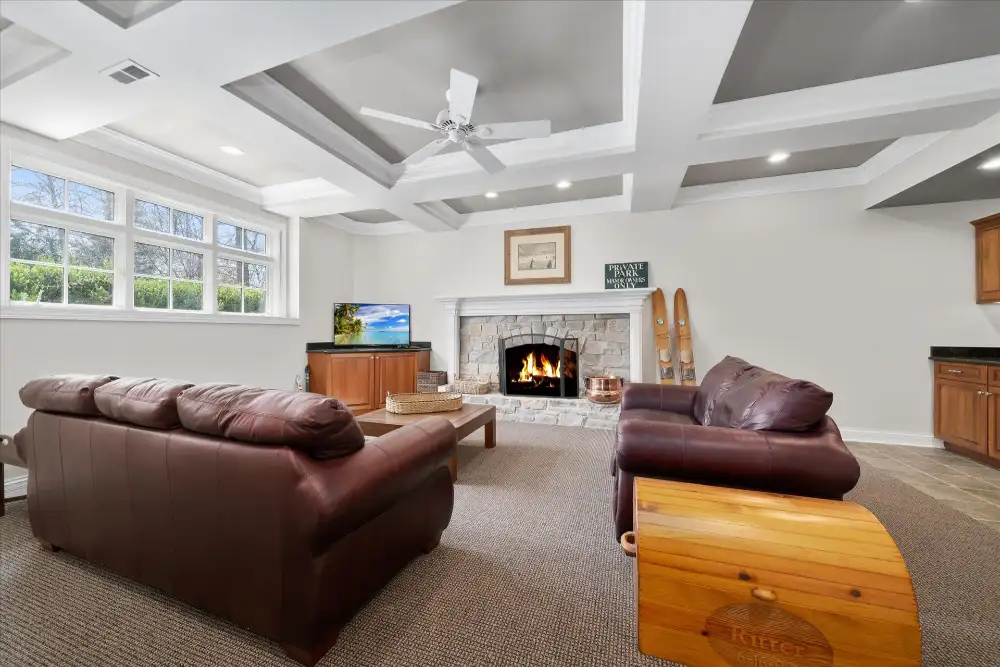
Custom game room and finished lower level in a Rite-Way home featuring brick fireplace and hardwood floors
What Buyers Can Typically Customize in Luxury Townhomes
Floor plan modifications tailored to specific lifestyle priorities
Unique exterior and interior material combinations
Custom cabinetry profiles, hardware, countertop materials, and tile selections
Specialty features such as wine cellars, home theaters, golf simulators, or custom mudrooms
Architectural detailing including coffered ceilings, built-in millwork, and custom staircases
This level of personalization is one of the key reasons buyers who have worked with a custom builder rarely return to production construction. It also helps explain why luxury homes built this way continue to stand out in the resale market years after completion.
Location and Lifestyle in Chicago’s Western Suburbs
Luxury townhomes are typically located in communities where walkability, access to dining and retail, school quality, and neighborhood character are all strong. In the western suburbs of Chicago, communities including Glen Ellyn, Wheaton, Naperville, Hinsdale, and St. Charles offer buyers a consistent combination of small-town livability and strong long-term property values that has made these markets perennially attractive to luxury buyers.
For buyers interested in new luxury construction, identifying the right site is a critical first step that often gets underestimated. Rite-Way Custom Homes provides property acquisition services specifically to help clients find and evaluate lots before the design process begins, which is a meaningful advantage in competitive suburban markets where premium buildable lots do not stay available for long.
Luxury Townhomes vs. Standard Builds: A Direct Comparison
Feature
Standard Townhome
Luxury Townhome
Exterior Materials
Vinyl siding, basic masonry
Natural stone, full brick, architectural metal
Interior Finishes
Builder-grade, limited packages
Custom cabinetry, premium stone, hardwood
Floor Plan
Fixed production layouts
Semi-custom or fully custom options
Kitchen and Bath
Standard fixtures, basic counters
Professional appliances, natural stone, custom millwork
Technology
Basic pre-wiring
Integrated smart home systems
Energy Performance
Meets minimum code
Exceeds code with high-efficiency systems
Sound Control
Minimal acoustic separation
Double-stud party walls, advanced insulation assemblies
Long-Term Value
Moderate resale potential
Strong appreciation, reduced maintenance costs
Questions to Ask When Evaluating a Luxury Townhome Builder
Not every builder who uses the word “luxury” operates at that standard. Before committing to a project, it is worth evaluating the builder’s track record, project portfolio, and process transparency. The right partner will be open about materials, subcontractors, and the level of client involvement available at each phase of design and construction.
Key Questions for Buyers Considering Luxury Townhomes
How many luxury townhome projects has the builder completed in this specific market?
What level of floor plan customization is available and at what phase of the project?
How are design changes handled once construction has started?
What warranty coverage is included, and what does it specifically cover?
Can the builder provide references from clients who completed a project within the last two years?
Who performs the work directly and who is subcontracted?
The same level of diligence applies when considering a builder for a luxury home addition or a significant renovation project. Craftsmanship, communication, and consistency across all phases of the engagement are the markers that separate exceptional builders from average ones.
Long-Term Investment Potential of Luxury Townhomes
While luxury townhomes require a higher initial investment than standard production builds, they have historically delivered stronger long-term returns. Superior construction, timeless architectural design, and desirable suburban locations contribute to resale values that hold up more reliably than production alternatives over time. For a more detailed look at the financial argument for luxury attached construction, the post Are Luxury Townhomes a Smart Long-Term Investment? covers the topic from multiple angles.
Luxury townhomes also tend to age with more grace than standard builds, requiring fewer major repairs and renovations over the first two decades of occupancy. This durability and enduring market appeal make them a sound choice for homeowners focused on both quality of life and long-term financial performance.
Build Your Luxury Townhome with Rite-Way Custom Homes
The difference between a luxury townhome and a standard build ultimately comes down to the experience, expertise, and commitment of the builder involved. At Rite-Way Custom Homes, we have spent over 35 years building some of the most beautiful homes in the western suburbs of Chicago, earning a consistent reputation for quality, integrity, and personalized service throughout Glen Ellyn, Wheaton, and the surrounding communities.
Whether you are exploring a new luxury townhome, planning a custom home building project from the ground up, or considering a major renovation or luxury home addition, we are committed to bringing your vision to life with craftsmanship that is evident in every detail. Contact Rite-Way Custom Homes today to start the conversation about your next project.
Frequently Asked Questions About Luxury Townhomes
What is the primary difference between a luxury townhome and a standard townhome?
The most important differences are construction materials, design quality, customization options, and the level of craftsmanship applied throughout the project. Luxury townhomes use higher-grade exterior and interior materials, offer far greater flexibility in floor plans and finishes, incorporate advanced technology and energy systems, and are built by specialized teams with experience delivering at that level of quality consistently.
Are luxury townhomes a good investment in Chicago’s western suburbs?
Yes. Communities such as Glen Ellyn, Wheaton, and Naperville maintain strong, consistent property values. Luxury townhomes built with superior materials and located in desirable neighborhoods tend to appreciate more reliably than production builds and require significantly fewer costly repairs over their useful life.
Can I customize the floor plan of a luxury townhome?
In most cases, yes. Builders specializing in luxury construction typically offer semi-custom or fully custom floor plan options. This allows buyers to shape the layout around their specific lifestyle priorities rather than accepting a fixed production design. The degree of flexibility varies by builder, so this is an important question to ask early in the evaluation process.
How does sound control in a luxury townhome compare to a standard build?
Luxury townhomes are typically built with advanced acoustic insulation and double-stud party wall systems that substantially reduce noise transfer between attached units. This is one of the most meaningful practical differences for buyers who are concerned about privacy in an attached-living situation.
What smart home features are typically included in a luxury townhome?
Common integrations include programmable multi-zone lighting and climate control, advanced security and remote-access systems, whole-home audio infrastructure, structured wiring, and pre-wiring for electric vehicle charging. The specific features available depend on the builder and the level of customization included in the project.
How do I find a qualified luxury townhome builder in the western suburbs of Chicago?
Look for builders with a proven portfolio of completed luxury projects in your target area, verifiable client references from recent projects, and a transparent process for customization and design changes. Rite-Way Custom Homes has built luxury homes and townhomes throughout the Glen Ellyn, Wheaton, and greater Chicago western suburbs area for over 35 years.
Luxury real estate has long been associated with stability, prestige, and sustained financial performance, and within that category, the luxury townhome investment has emerged as one of the most compelling options available to both owner-occupants and income-focused buyers. Combining premium construction, upscale design, and more manageable ownership costs than a comparable single-family estate, luxury townhomes occupy a strategic position in the market. Whether you are evaluating a primary residence with strong resale potential or a property designed to generate long-term rental income, understanding the full picture is essential before committing.
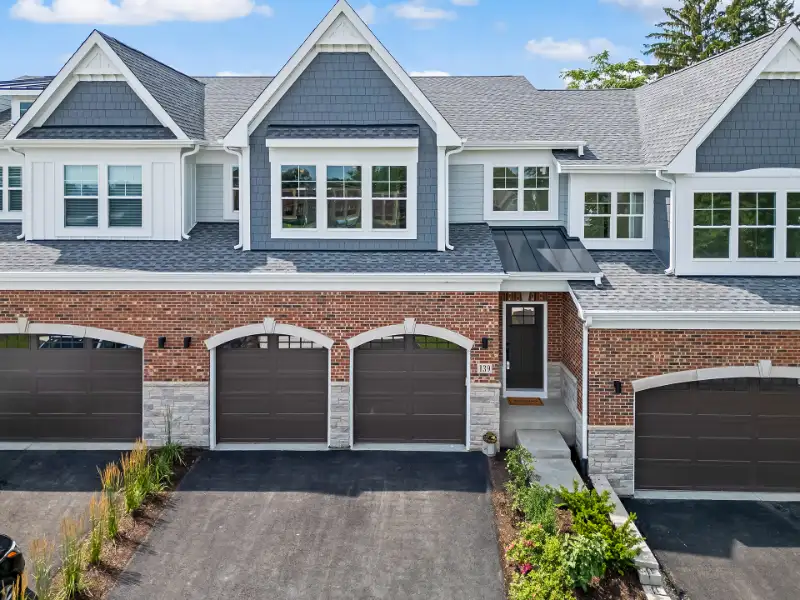
Luxury townhome exterior featuring brick, stone, and custom garage at 139 Harding by Rite-Way Custom Homes
The Case for a Luxury Townhome Investment
Unlike standard attached housing, luxury townhomes are designed and built to a standard that aligns with long-term ownership priorities: durable materials, timeless architecture, and finishes that hold their appeal across market cycles. This is not simply a lifestyle decision. It is a financial one, and the construction quality that defines a true luxury build plays a direct role in how the property performs over time.
Buyers and investors who understand the distinction between a luxury townhome and a production build recognize that the gap in quality often translates directly into a gap in resale value, rental rates, and long-term marketability. For a deeper look at what separates these two categories, the post What Makes a Luxury Townhome Different from Standard Builds? covers the specifics in detail.
Why a Luxury Townhome Investment Holds Long-Term Appeal
Several structural factors make luxury townhomes an attractive long-term hold for both personal use and investment purposes:
Broad buyer appeal across multiple demographics, including professionals, downsizers, and families
High-quality construction that depreciates more slowly than production alternatives
Strong demand in suburban markets where land is finite and new luxury supply is constrained
Lower maintenance obligations compared to single-family homes of equivalent size and finish level
Dual-purpose utility as both a primary residence and a future income-generating rental
Long-Term Appreciation Potential
One of the primary considerations in any real estate investment is appreciation. Luxury townhomes built in high-demand suburban markets with strong school districts, vibrant commercial corridors, and commuter access tend to appreciate steadily over time. While appreciation rates may differ from large single-family homes in some markets, well-positioned luxury townhomes consistently deliver value growth that outpaces inflation over extended holding periods.
Factors That Drive Luxury Townhome Investment Value Over Time
Several variables consistently support appreciation in the luxury attached segment:
Limited land availability in established suburban communities with high barriers to new development
Increasing buyer demand for high-quality housing with reduced maintenance responsibilities
Architectural and material quality that ages well and avoids the dated appearance of lower-cost builds
Proximity to retail, dining, transit, and community amenities that attract consistent buyer interest
Custom builder reputation and demonstrated craftsmanship that commands a premium at resale
According to the National Association of Realtors, luxury properties in established suburban markets have consistently demonstrated stronger price resilience during market corrections than entry-level or mid-market alternatives. This is largely due to the financial stability of the buyer pool and the scarcity of high-quality product in desirable locations.
How Construction Quality Connects to Appreciation
A luxury townhome built by an experienced custom builder and maintained properly should require fewer major capital expenditures over its first two decades of ownership than a comparable production townhome. This reduces the total cost of ownership substantially and supports a higher net return at the point of sale. Quality and appreciation are not separate conversations. They are the same conversation.
Lower Maintenance and More Predictable Ownership Costs
One of the most underappreciated financial advantages of luxury townhome ownership is the reduction in maintenance complexity compared to a detached single-family home of equivalent finish level. Exterior maintenance, landscaping, and in many cases roofing and structural elements are managed through a homeowners association, converting variable and unpredictable repair expenses into fixed, budgetable monthly costs.
What Predictable Costs Mean for Investment Performance
For investors, this predictability directly improves cash flow modeling and reduces the risk of unexpected capital calls that erode returns. For owner-occupants, it preserves time and eliminates the logistical burden of managing exterior contractors, seasonal upkeep, and emergency repairs. Both groups benefit from the same structural advantage: a home that performs at a high level without requiring constant attention.
It is worth noting that HOA quality varies significantly across developments. Before committing to a luxury townhome purchase, it is important to review:
Reserve fund balance and funding percentage relative to total estimated replacement costs
Historical special assessment frequency over the past ten years
Scope of maintenance obligations covered versus the owner’s responsibility
Restrictions on short-term rentals or lease terms if income generation is part of the plan
Rental Income Potential in the Luxury Segment
Luxury townhomes can perform well as rental properties in markets where high-income renters seek upscale residences that offer privacy, refined finishes, and access to top-tier communities without the commitment of ownership. The rental case for luxury attached housing has strengthened considerably over the past decade as household formation patterns have shifted and more high-income individuals choose renting as a deliberate lifestyle preference rather than a transitional necessity.
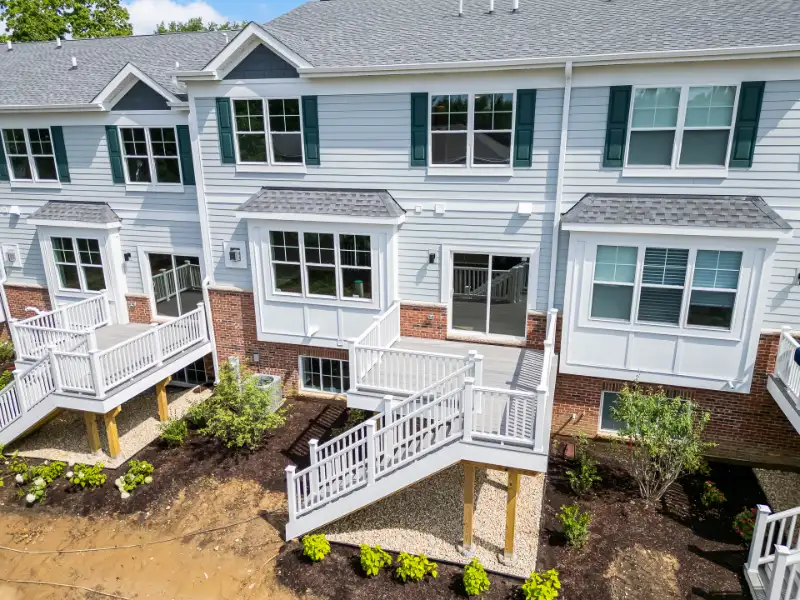
Rear elevation of luxury townhomes at 139 Harding featuring private outdoor spaces and custom architectural detailing
Who Rents Luxury Townhomes?
Understanding the tenant profile for luxury attached housing helps clarify the income stability of this property type as a rental investment:
Relocating professionals seeking furnished or move-in-ready housing in established communities
Empty nesters testing a new market or lifestyle before committing to a purchase
Families in transition during a custom home build or major renovation project
High-income individuals who prefer the flexibility of renting and the quality of luxury finishes
Because luxury townhomes attract financially stable, long-term tenants, vacancy periods tend to be shorter and properties typically experience less wear between tenancies. Rental income generated over a five to ten year hold can substantially offset total ownership costs while the underlying asset continues to appreciate.
Demographic Shifts Supporting Long-Term Demand
Real estate investment performance is closely tied to the demographic trends shaping buyer and renter demand over time. Current shifts strongly favor the luxury townhome segment across multiple fronts.
Key Buyer Segments Driving Demand
Baby boomers continue to downsize from large single-family homes in search of high-end living environments that require less maintenance and offer proximity to community amenities. Younger professionals and dual-income households are prioritizing location, build quality, and lifestyle over maximum square footage. Both groups are growing, and both groups are underserved by production builders who cannot deliver at the quality level they demand.
Additionally, accessibility considerations are increasingly influencing purchase decisions across age groups. Luxury townhomes built with flexible layouts, main-level bedroom options, and wider doorways serve a buyer who expects to remain in the home through multiple life stages. This adaptability reduces resale risk and broadens the buyer pool at the point of exit.
What the Numbers Say About Luxury Attached Housing
The share of buyers prioritizing lower-maintenance housing with premium finishes has grown consistently over the past decade. As suburban markets absorb continued demand from urban out-migration and domestic relocation activity, the supply of high-quality luxury attached housing has not kept pace. That supply-demand imbalance is one of the most durable structural advantages supporting luxury townhome investment performance going forward.
Market Resilience During Economic Cycles
Luxury townhomes have demonstrated meaningful resilience during market downturns relative to other property types. This resilience stems from several reinforcing factors. The buyer pool for luxury attached housing tends to be financially stable, with lower leverage ratios and stronger credit profiles than entry-level buyers. Forced sellers are less common in this segment, which supports price floors during periods of broader market stress.
Because luxury townhomes serve both owner-occupants and renters, they benefit from diversified demand. During periods when buyer hesitation increases, rental demand typically rises, providing a buffer against vacancy and income disruption. This flexibility gives luxury attached properties a risk profile that is more stable than niche or speculative property types in the same price range.
Comparing Investment Options: Luxury Townhome vs. Single-Family vs. Condo
Every investment category in residential real estate carries distinct advantages and trade-offs. Understanding how luxury townhomes compare to the alternatives helps clarify where they fit within a broader investment strategy.
Factor
Luxury Townhome
Single-Family Luxury Home
Luxury Condo
Acquisition Cost
Moderate relative to finish level
Higher, often significantly
Varies widely by market
Maintenance Responsibility
Exterior managed by HOA
Fully owner-managed
Mostly HOA-managed
Appreciation Potential
Strong in supply-constrained markets
Highest absolute upside
More variable, market-dependent
Rental Flexibility
Good with HOA review
Fully flexible
Often restricted by HOA
Privacy
High with quality construction
Maximum
Lower, shared building systems
Customization
Semi-custom to fully custom options
Fully custom possible
Limited to interior finishes
Land Ownership
Yes (lot ownership)
Yes (full lot)
No (airspace only)
For investors seeking a balance between appreciation potential, income flexibility, and manageable ownership obligations, luxury townhomes represent a well-rounded middle ground that outperforms condos on privacy and customization while remaining more accessible than comparable single-family homes.
The Role of Construction Quality in Investment Performance
Not all townhomes marketed as luxury deliver at that standard. Construction quality is one of the most decisive factors in determining how a property performs financially over a ten to twenty year hold period. Luxury townhomes built by experienced custom builders tend to outperform mass-produced alternatives because they prioritize durability, craftsmanship, and architectural longevity over short-term cost efficiency.
Custom tile shower with built-in niche and premium fixtures in a Rite-Way luxury townhome bathroom
Construction Indicators That Protect Your Luxury Townhome Investment
When evaluating a luxury townhome as an investment, the following construction quality markers directly influence long-term value retention:
Premium exterior materials that require minimal long-term upkeep and resist weathering
High-efficiency mechanical systems with extended service life and lower operating costs
Solid core interior construction including doors, trim profiles, and cabinetry
Acoustic insulation systems between units that protect privacy and marketability at resale
Thoughtful floor plans that adapt to multiple use cases over time rather than serving a single lifestyle profile
The difference between a builder who applies true custom home standards to townhome construction and one who uses the word “luxury” as a marketing description is measurable in both the finished product and the resale data years later. Working with Rite-Way Custom Homes means the same craftsmanship applied to a custom home building project carries through to every attached residence we deliver.
Customization as an Investment Differentiator
Luxury townhomes that offer meaningful customization options consistently stand apart in the resale market. Buyers at the luxury level are attracted to homes that feel distinctive and personally considered rather than uniform. A townhome with custom architectural elements, tailored interiors, and high-end material selections commands a measurable premium over a comparable production unit with basic finishes, even years after original sale.
The ability to incorporate personalized features during construction also reduces the likelihood of costly renovation projects down the line, which preserves both the owner’s capital and the home’s market-ready condition. For buyers exploring what a custom approach to townhome construction actually involves, the concept design process used by Rite-Way Custom Homes reflects the same standards applied to fully custom single-family residences.
Investing Across Different Life Stages
One of the more nuanced arguments in favor of luxury townhome ownership is how well the property type serves buyers across multiple life stages. Unlike a large single-family home that may become impractical to maintain as circumstances change, or a condo that lacks flexibility and outdoor space, a luxury townhome often adapts to evolving needs more gracefully.
How Investment Strategy Shifts by Buyer Profile
Early-career professionals: Establish equity in a premium asset while benefiting from lower maintenance obligations and a lifestyle-forward living experience
Growing families: Access high-quality construction and flexible floor plans in established communities with strong schools and long-term resale fundamentals
Downsizers: Capture equity from a larger home while moving into a custom-level residence that requires less physical and financial upkeep
Investors: Acquire a durable asset with broad tenant appeal, predictable operating costs, and appreciation potential in supply-constrained suburban markets
In each case, the underlying investment logic is consistent: a well-built luxury townhome in a desirable market serves the owner’s current needs while building long-term equity and market value. Whether or not you eventually contact Rite-Way Custom Homes to begin a project, understanding this alignment between lifestyle and financial performance is the foundation of a sound decision.
Key Questions to Ask Before Making a Luxury Townhome Investment
A successful long-term investment requires asking the right questions before the purchase, not after it. Below are the most important considerations for buyers evaluating a luxury townhome investment from a financial performance perspective.
Due Diligence Checklist for Luxury Townhome Buyers
What is the builder’s track record of completed projects and post-sale client satisfaction?
Has the development experienced any significant construction defect claims or HOA litigation?
What is the current HOA reserve fund balance and what percentage of full funding does it represent?
Are there any restrictions on leasing the property, and what is the current renter-to-owner ratio?
What comparable sales exist within the development or nearby, and how have prices trended over the past five years?
What is the absorption rate for luxury attached housing in this specific submarket?
If you are building rather than buying an existing unit, working with a builder who offers property acquisition support can be a meaningful advantage in identifying sites with the strongest long-term investment fundamentals before design and construction begin.
Build Your Luxury Townhome Investment with Rite-Way Custom Homes
The long-term performance of a luxury townhome investment is inseparable from the quality of the builder who delivers it. At Rite-Way Custom Homes, we bring over 35 years of custom home building experience to every project we undertake, applying the same craftsmanship standards to luxury townhome construction that our clients expect from a luxury home addition or a fully custom single-family residence.
If you are considering a luxury townhome project, an entirely custom home, or a major renovation, we welcome the conversation. Contact Rite-Way Custom Homes today to discuss your goals and how we can help you build an asset that performs for decades to come.
Frequently Asked Questions About Luxury Townhome Investments
Is a luxury townhome a good long-term investment?
Yes, for most buyers and investors. Luxury townhomes built with high-quality materials in supply-constrained markets tend to appreciate steadily, attract financially stable tenants when used as rentals, and require less maintenance capital than comparable single-family homes. Long-term performance depends significantly on construction quality, builder reputation, HOA financial health, and local market fundamentals.
How do luxury townhomes perform compared to single-family homes as investments?
Single-family luxury homes may offer slightly higher absolute appreciation in some markets due to full land ownership and no shared walls. Luxury townhomes, however, offer a more manageable total cost of ownership, broader buyer appeal at resale, and lower acquisition cost relative to the finish level. For many investors, this combination delivers a stronger net return over a ten to twenty year hold.
Can I rent out a luxury townhome?
In most cases, yes. However, HOA rules vary. Some associations restrict short-term rentals or impose minimum lease terms. Before purchasing as an investment, review the HOA governing documents carefully and confirm the current ratio of owner-occupants to renters within the development, as lender financing guidelines are also affected by this ratio.
What makes one luxury townhome a better investment than another?
Construction quality, builder reputation, location fundamentals, HOA financial health, floor plan adaptability, and the level of customization incorporated into the home are the primary differentiators. A townhome built with the craftsmanship standards of a custom single-family residence will consistently outperform a production alternative across every investment metric over time.
Does customization add resale value to a luxury townhome?
Yes. Luxury townhomes with custom architectural details, premium material selections, and thoughtfully personalized interiors consistently command a resale premium over comparable units with standard finishes. Customization that reflects timeless design rather than short-lived trends has the strongest positive effect on long-term resale value.
How important is the builder when evaluating a luxury townhome as an investment?
Extremely important. The builder’s experience, subcontractor relationships, materials sourcing, and quality control practices are all reflected in the finished product. A home built with true custom standards requires less maintenance capital, ages more gracefully, and commands higher prices at resale and in the rental market than one built to a lower standard regardless of how it is marketed.
The custom home building process takes a home from a rough idea to a finished residence designed around your family, your lot, and your budget. It is a long, collaborative journey with distinct phases: planning, design, permitting, pricing, construction, and a final walkthrough. Knowing what happens in each phase, who is responsible, and when your decisions are needed lets you protect your timeline and your budget while enjoying the experience of creating something personal.
What Is the Custom Home Building Process?
The custom home building process is a structured sequence that turns your goals into architectural plans and then into a finished house. Unlike a production home, which is built from a limited menu of plans, a custom home is designed from the ground up for your site and your lifestyle. The floor plan, exterior style, structural details, and every finish are chosen by you with guidance from your builder, architect, and designer.
That freedom is also what makes the process longer and more detailed than buying a finished home. Each phase builds on the one before it, and a decision made early, such as the footprint of the house or the location of a kitchen, affects cost and schedule many months later.
Custom Home Building Process vs. Production Home Construction
Production builders reduce cost and time by repeating the same plans across many lots. Custom builders trade that repetition for flexibility. The table below shows how the two approaches differ in the areas that matter most to homeowners.
Factor
Custom Home
Production Home
Floor plan
Designed for your family and lot
Selected from a set of existing plans
Materials and finishes
Chosen individually, including specialty items
Chosen from limited packages
Site
Plan is fitted to your lot
Lot is often fitted to the plan
Your involvement
High, with decisions throughout
Moderate, mostly at selection time
Timeline
Longer, with a design phase before permits
Shorter, because plans already exist
Steps to Building a Custom Home, Phase by Phase
Every project is different, but nearly all custom homes move through the same eight steps. Understanding the order helps you see why some decisions cannot wait and why others can.
Step 1: Vision, Budget Range, and Lot Selection
The first phase is about clarity. You define how you want to live in the home: the number of bedrooms, whether you need a main-floor suite, how you entertain, and whether you want space for aging in place or for a growing family. You also set a realistic budget range and decide which priorities come first when trade-offs arise.
If you do not own land yet, this is also when the lot search begins. Zoning, setbacks, utility access, soil conditions, and neighborhood guidelines all determine what can be built, so many buyers get a builder involved before they commit to a purchase. Support with finding and securing the right lot can prevent an expensive surprise later.
Decisions to make in this phase:
Priorities for layout, function, and architectural style
A budget range that includes the lot, construction, landscaping, and a contingency
Lot conditions, zoning, and neighborhood requirements
Roles and expectations for you and your builder
Step 2: The Custom Home Design Process
Once your goals are clear, architects and designers translate them into drawings. The concept and design phase typically moves from rough sketches and room relationships to detailed floor plans, exterior elevations, and interior layouts. You review several rounds of revisions until the plans feel right in terms of flow, light, and scale.
Material and finish conversations begin here too. Exterior cladding, roofing, windows, cabinetry, flooring, and fixtures all influence both the look of the home and the cost, so early direction keeps the design aligned with your budget.
Step 3: Engineering, Permits, and Pre-Construction Planning
With design set, engineers finalize the structural, mechanical, and energy details, and the plans are submitted for permit review. Your builder works with the local building department to secure approvals and respond to any comments. Review times vary by municipality and by project complexity, which is why an experienced builder who knows local requirements can keep this step moving.
Pre-construction planning also covers the detailed schedule, the order of trades, and the early ordering of long-lead items. This is the quiet phase before anything visible happens on the site, but it is where much of the project’s success is decided.
Structural engineering and energy efficiency planning
Interior design coordination and finish selections
Permit submission, review, and approval
Construction schedule and trade coordination
Step 4: Final Pricing and Contract
Once plans and specifications are complete, your builder prepares a detailed cost breakdown that covers construction costs, allowances for items you have not selected yet, and any optional upgrades. Review it line by line. The goal is to understand where every dollar is going and to make adjustments now, while changes are inexpensive.
When scope, schedule, and price are agreed upon, you sign a construction contract that defines responsibilities, payment milestones, and how changes will be handled.
Step 5: Site Preparation and Foundation
Construction begins with clearing and grading the lot, setting up temporary utilities, and staking the home’s location. Excavation follows, and then the foundation is formed and poured. Depending on the design, that could be a full basement, a crawl space, or a slab.
The foundation carries the entire structure, so it is inspected before work moves on. Waiting for the concrete to cure and passing inspection are built-in pauses that are easy to overlook when you are anxious to see walls go up.
Step 6: Framing, Rough-Ins, and the Weatherproof Shell
Framing is when the house suddenly looks like a house. Floors, walls, and the roof structure go up according to the approved plans, and windows and exterior doors follow. This is a good time to walk through with your builder, because you can feel room sizes and sight lines in person while changes are still manageable.
Plumbing, Electrical, and HVAC Rough-Ins
After framing, the trades install the systems that live inside the walls and floors. Rough-in locations for outlets, switches, lighting, plumbing fixtures, and ductwork should match your finalized plans, because moving them after drywall is costly.
Inspections Before Insulation and Drywall
Framing and rough-in inspections confirm that the structure and systems meet code before they are covered. Passing these inspections is a required checkpoint, not a formality.
Step 7: Interior and Exterior Finishes
With the shell and systems complete, insulation and drywall go in, followed by trim, cabinetry, countertops, flooring, tile, paint, and fixtures. On the exterior, siding, masonry, porches, and landscaping bring the architecture to life. This is the phase where the home’s personality emerges, and it is also where the most homeowner selections are due.
Cabinets, countertops, and hardware
Flooring, tile, and paint colors
Lighting and plumbing fixtures
Exterior details and outdoor living spaces
Step 8: Final Inspections, Walkthrough, and Move-In
As construction wraps up, final inspections confirm that the home meets code and is safe to occupy. You then tour the finished home with your builder to review workmanship, create a punch list of small corrections, and learn how the mechanical systems and features operate. After the punch list is complete, you receive your keys and warranty information.
How Long Does Building a Custom Home Take?
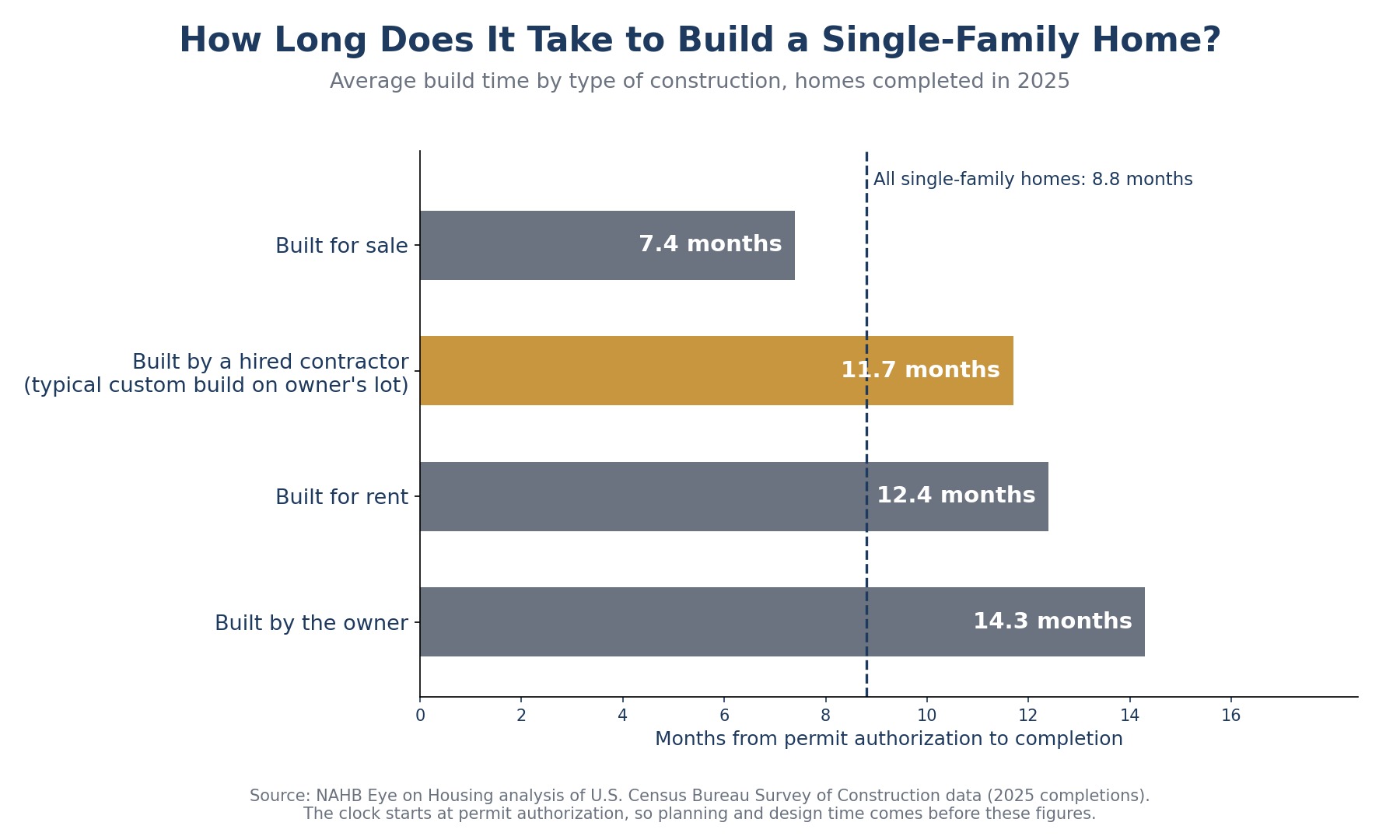
Build time is one of the first questions homeowners ask, and national data gives a useful baseline. According to NAHB’s analysis of Census Bureau data, a typical new single-family home took 8.8 months from start to finish in 2025, including about 1.4 months for authorization to begin and 7.4 months for construction.
Custom builds run longer than that average. Homes built by a hired contractor took about 11.7 months from permit to completion, while homes managed by the owner took about 14.3 months. Those figures start at permit authorization, so the months you spend on planning and design come first.
Several factors stretch a custom schedule compared with a production build:
A design phase that happens before permits are even submitted
One-of-a-kind structural details and specialty materials
More homeowner selections, each of which has to be made on time
Weather, inspection schedules, and material lead times that no one controls
What Building a Custom Home Costs and Where the Money Goes
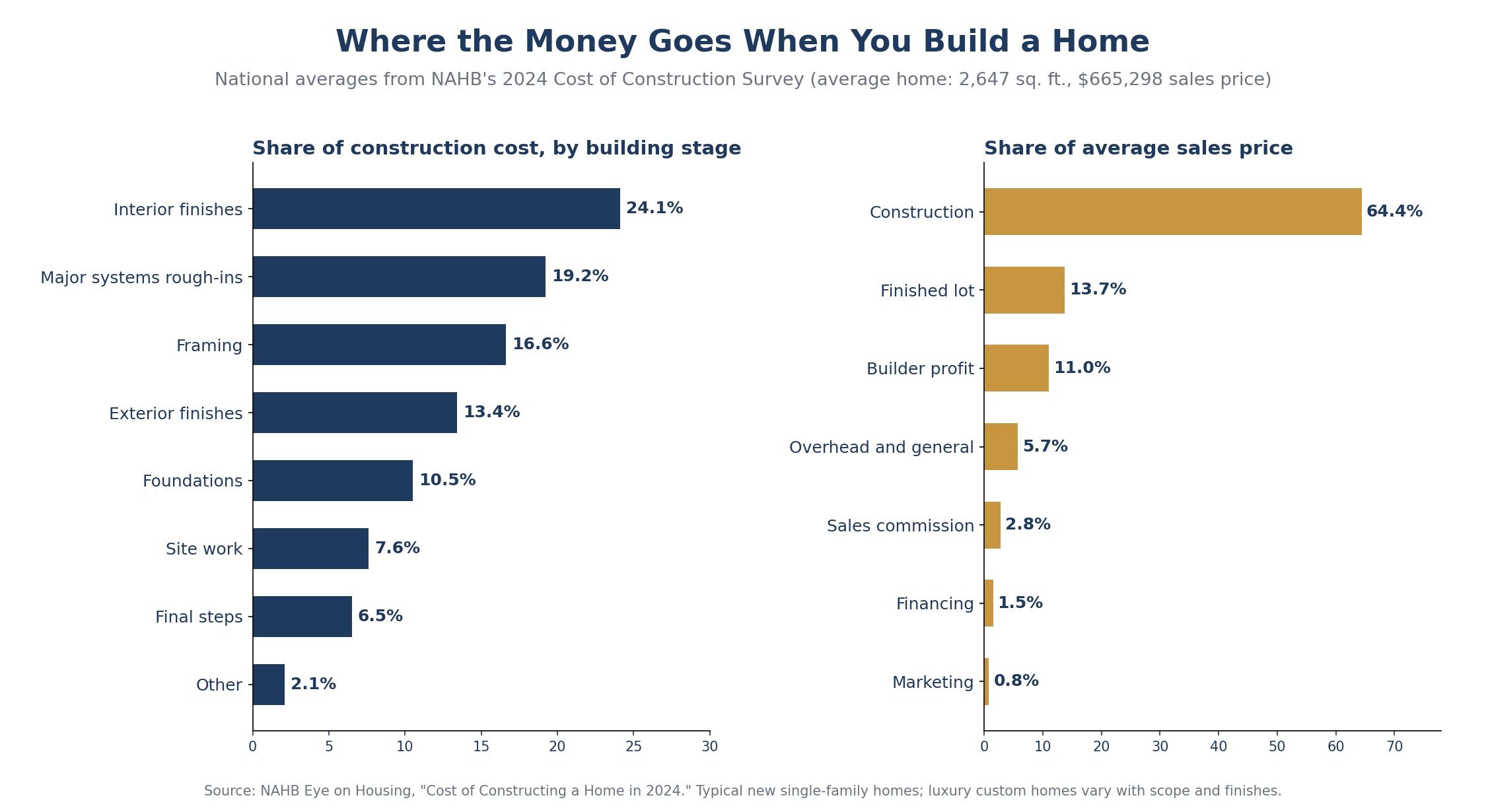
Cost depends on size, site conditions, architectural complexity, and finish level, so a reliable number only comes from a line-item estimate based on your plans. National data still helps you understand how a budget is divided. NAHB’s 2024 Cost of Construction Survey found that construction made up 64.4% of the average sales price of a new home, the finished lot made up 13.7%, and builder profit averaged 11.0%. Within construction itself, interior finishes were the largest share at 24.1%, followed by major systems rough-ins at 19.2% and framing at 16.6%.
These are national averages for typical new homes, not luxury custom projects, but the pattern holds: finishes and the systems behind the walls drive most of the cost, which is why selections made early have an outsized effect on your budget.
Allowances, Change Orders, and Contingency
Three terms in your contract deserve a close read:
Allowances are placeholder amounts for items not yet selected, such as tile or lighting. Choosing above the allowance raises the price, and choosing below it lowers the price.
Change orders are written agreements to alter the scope after the contract is signed. They affect both cost and schedule, so the earlier a change is made, the cheaper it is.
Contingency is money set aside for the unexpected, such as soil conditions or a price change on a material. Ask your builder what level they recommend for your site and design.
Decisions That Keep Your Build on Schedule
Most delays in a custom build trace back to late selections rather than problems on the job site. Items with longer lead times, such as windows, custom cabinetry, specialty tile, and appliances, should be chosen well before they are needed. A few habits keep you ahead of the schedule:
Ask for a selections calendar that shows the date each decision is due
Finalize layouts and electrical plans before framing begins
Confirm every change in writing, with its cost and schedule impact
Join regular check-ins and walkthroughs so questions are answered quickly
How to Choose a Builder for Your Custom Home
Your builder guides every phase, so the choice affects quality, cost, and how much stress you feel along the way. Look for a team with proven luxury custom home construction experience on homes similar to yours in size and style, and ask to see completed projects and talk with past clients.
Questions to Ask Before You Sign
How do you handle design, and who coordinates the architect and engineers?
Is the contract fixed price or cost-plus, and how are allowances managed?
Who supervises the site each day, and how often will I get updates?
How are change orders priced, approved, and documented?
What warranty and post-move-in support do you provide?
The right partner explains the process clearly, shares realistic timelines, and tells you when a decision will affect cost. A builder like Rite-Way Custom Homes brings that transparency to every phase, from the first conversation through the final walkthrough.
Go Deeper: 50 Steps to Building a Custom Home
If you want a more detailed look at the milestones in a custom build, the third book in our four-book builder’s insight series, 50 Steps To Building A Custom Home, breaks the journey into practical steps you can follow.
Custom Home Building Process FAQs
How long does the custom home building process take?
Plan on roughly a year of construction once permits are issued. NAHB’s analysis of Census Bureau data shows homes built by hired contractors for owners took about 11.7 months from permit to completion in 2025, and owner-managed builds took about 14.3 months. Planning and design come before those figures, so most families should budget additional months up front.
What is the first step in building a custom home?
The first step is defining your priorities and a realistic budget range, then evaluating your lot. Those early decisions shape the design, the permit requirements, and the final price more than any later choice.
How much does it cost to build a custom home?
Cost depends on size, site conditions, architecture, and finishes. For context, NAHB’s 2024 Cost of Construction Survey found that construction averaged $428,215 for a typical new single-family home, or 64.4% of the sales price. Luxury custom homes with complex designs and premium materials commonly run higher, so a line-item estimate based on your plans is the only reliable number.
Do I need to own land before I start?
No. Many homeowners begin the process while searching for a lot, and a builder can evaluate zoning, utilities, soil, and setbacks before you buy. Doing that homework first helps you avoid a lot that cannot support the home you want.
What is the difference between a custom home and a semi-custom home?
A custom home starts from a blank sheet with a floor plan, architecture, and materials designed for you and your lot. A semi-custom home starts from an existing plan that you modify within set limits, which usually narrows both the design freedom and the design timeline.
Is building a custom home better than adding on to my current home?
It depends on your lot, your neighborhood, and how much of the existing structure meets your needs. If the layout and location still work, a luxury home addition can add space and value without starting over. If the foundation, floor plan, or site limits what you can achieve, building new gives you complete control.
Who handles permits and inspections?
Your builder typically prepares the permit submission with your architect and engineers, schedules the required inspections, and coordinates corrections with the local building department. You stay informed, but you do not have to manage the paperwork yourself.
Ready to Start Your Custom Home?
A well-run build feels organized because the planning was thorough. If you are ready to talk through your lot, your vision, and your budget, schedule a consultation with our team and take the first step toward a home built around you.
Building a custom home is one of the most significant investments a homeowner can make. It is not only a financial commitment but also a deeply personal journey that involves translating lifestyle needs, aesthetic preferences, and long-term goals into a physical space. In recent years, design-build custom homes have become an increasingly popular approach for homeowners who want a smoother process, clearer communication, and better overall results. Rather than juggling separate contracts and teams, the design-build model brings design and construction together under one roof, creating a unified and highly efficient experience. Understanding what this approach really includes can help you decide if it is the right fit for your custom home project.
What Are Design-Build Custom Homes?
Design-build custom homes are projects where a single company is responsible for both the design and construction phases of the home. Instead of hiring an architect or designer separately and then bidding the plans out to a builder, the homeowner works with one integrated team from concept through completion. This team typically includes architects, designers, project managers, and construction professionals who collaborate from day one.
The design-build approach is built on the idea that early collaboration leads to better outcomes. Designers and builders work together to ensure that creative ideas align with realistic budgets, timelines, and construction methods. This reduces the likelihood of costly changes later in the process and helps ensure that the finished home reflects the homeowner’s vision without unnecessary stress.
Key components of design-build custom homes often include:
Initial consultation and needs assessment
Conceptual and architectural design
Budget development and cost estimating
Engineering and permitting coordination
Construction and project management
Ongoing communication and quality control
Because everything is handled by one team, accountability is clearer, and the process is more transparent.
How Design-Build Custom Homes Simplify the Process
One of the most appealing aspects of design-build custom homes is how much they simplify the overall experience. Traditional construction models often require homeowners to act as intermediaries between designers and builders. In contrast, the design-build model removes those barriers.
From the earliest conversations, the design-build team collaborates internally to solve problems before they reach the homeowner. This leads to fewer surprises and a more predictable experience.
Some of the ways design-build simplifies the process include:
A single point of contact for the entire project
Faster decision-making due to internal collaboration
Reduced risk of design elements that are difficult or expensive to build
Streamlined scheduling and coordination
Clear responsibility if issues arise
For homeowners, this means less time spent managing the project and more confidence that every detail is being handled professionally.
Benefits of the Design-Build Home Construction Model
The design-build home construction model offers several advantages that go beyond convenience. It is designed to improve efficiency, reduce risk, and deliver higher quality results.
One major benefit is improved communication. Since designers and builders are part of the same team, they share information freely and consistently. This eliminates the common problem of misaligned expectations between separate firms.
Another key benefit is enhanced collaboration. Builders can provide real-time feedback during the design phase, suggesting materials, layouts, or construction methods that improve durability, performance, or cost efficiency. Designers, in turn, can adapt plans quickly without lengthy back and forth between independent parties.
Additional benefits include:
Greater budget transparency from the start
Fewer change orders during construction
Shorter overall project timelines
Higher consistency in quality and craftsmanship
A more cohesive final design
For custom home projects where complexity and personalization are high, these advantages can make a significant difference.
Comparing Design-Build vs Traditional Construction
To fully appreciate the value of design-build custom homes, it helps to compare them with the traditional design-bid-build model. In traditional construction, the homeowner typically hires an architect to create plans and then solicits bids from multiple builders. While this approach can work, it often introduces challenges.
In a traditional model:
Designers and builders work under separate contracts
Cost estimating happens after design completion
Builders may identify constructability issues late in the process
Homeowners may face unexpected budget increases
Disputes over responsibility can arise
By contrast, the design-build model integrates all phases from the beginning. Costs are considered during design, not after. Builders have input on materials and methods early on, reducing the risk of impractical design elements. This alignment often leads to better cost control and fewer delays.
For homeowners who value collaboration, efficiency, and accountability, design-build is often the preferred option.
Cost Control and Accountability in Design-Build Projects
Cost control is one of the most common concerns for anyone building a custom home. Design-build custom homes address this concern by aligning design decisions with real-world construction costs from the outset.
Because the same company is responsible for both design and construction, there is a strong incentive to create solutions that are both beautiful and cost-effective. Budgets are developed early and refined as the design evolves, giving homeowners a clearer picture of where their money is going.
Key elements of cost control in design-build projects include:
Early and ongoing cost estimating
Value engineering during the design phase
Fewer change orders due to coordinated planning
Transparent pricing and scope definition
Accountability is also clearer. With a single contract, there is no ambiguity about who is responsible if something goes wrong. The design-build firm owns the entire process, which reduces finger-pointing and increases trust.
Is Design-Build Right for Your Custom Home Project?
While design-build custom homes offer many advantages, it is important to consider whether this approach aligns with your specific needs and expectations. Design-build is especially well-suited for homeowners who value collaboration and want to be involved in the process without managing multiple vendors.
This model is often ideal for:
Complex custom homes with unique design elements
Luxury homes where quality and detail are priorities
Projects with tight timelines or specific budgets
Homeowners who want a streamlined experience
Additions and major renovations that require careful integration with existing structures
That said, success with design-build depends heavily on choosing the right partner. Experience, communication style, and a proven track record are critical factors. A reputable design-build firm will take the time to understand your goals, guide you through decisions, and deliver results that reflect your vision.
When evaluating whether design-build is right for you, consider asking:
Do I want a single team responsible for design and construction?
Is budget predictability important to me?
Do I value collaboration and ongoing communication?
Am I looking for a long-term partner rather than separate vendors?
If the answer to these questions is yes, design-build may be the ideal solution.
The Design-Build Experience from Start to Finish
Understanding what is included in the design-build process can help set realistic expectations. While every firm has its own approach, most design-build custom home projects follow a similar structure.
The process typically begins with an in-depth consultation. During this phase, the team learns about your lifestyle, design preferences, lot conditions, and budget goals. This information forms the foundation for the design.
Next comes conceptual and architectural design. Floor plans, elevations, and material concepts are developed collaboratively. Because builders are involved, designs are grounded in practical construction knowledge.
As the design progresses, detailed pricing and scheduling are refined. Permits and engineering are coordinated by the same team, reducing delays. Construction then begins with a dedicated project manager overseeing quality, schedule, and communication.
Throughout the process, homeowners benefit from:
Regular updates and meetings
Clear timelines and milestones
Professional oversight of trades and materials
Attention to detail at every stage
The result is a home that reflects thoughtful design, expert craftsmanship, and a cohesive vision.
Why Design-Build Matters in Luxury Home Construction
In luxury home construction, the stakes are higher. Custom details, premium materials, and advanced building systems require careful coordination. Design-build custom homes are particularly well-suited for this level of complexity.
Luxury projects often involve:
Custom millwork and cabinetry
High-end finishes and fixtures
Energy-efficient and smart home technologies
Structural and architectural challenges
Extensive customization
An integrated design-build team can manage these elements more effectively than separate firms. Decisions are made holistically, ensuring that aesthetics, performance, and durability are aligned. This approach supports a higher standard of quality and a more refined final product.
Partner with Rite-Way Custom Homes for Your Design-Build Project
Choosing the right design-build partner is one of the most important decisions you will make when building or transforming your home. At Rite-Way Custom Homes, we specialize in extraordinary custom homes, luxury home additions, and major renovations in the western suburbs of Chicago, including Glen Ellyn, Wheaton, and the surrounding communities. For over 35 30 years, we have built some of the most beautiful homes in the region, earning a reputation for quality, integrity, and personalized service.
Whether you are looking to build your dream home from the ground up, expand your living space, or reimagine your existing home with high-end renovations, our experienced team is here to bring your vision to life with expert craftsmanship and attention to detail. We believe that a successful design-build experience is built on trust, collaboration, and a deep understanding of our clients’ needs.
If you are considering a custom home or major renovation and want a streamlined process with exceptional results, we invite you to connect with Rite-Way Custom Homes. Contact us to learn more and take the first step toward creating a home that reflects your style, meets your needs, and exceeds your expectations.
For additional reference, you may find our book “Building AnAn Extraordinary Custom Home” helpful. You can access a free online copy at: